Asphalt Shingle Roof Installation in Greater Boston, MA
Expert Asphalt Shingle Roof Installation for Greater Boston, MA Homes & Businesses
Blue Hills Roofing Solutions offers expert asphalt shingle roof installation across Greater Boston, MA. Get a free estimate today — call (617) 712-2287.
Asphalt shingle roof installation is the process of professionally selecting, preparing, and securing layered shingle systems onto residential and commercial structures to create a durable, weatherproof envelope. At Blue Hills Roofing Solutions, we specialize in delivering precision asphalt shingle installations across Greater Boston — a region where brutal nor’easters, ice dam formation, and rapid freeze-thaw cycling demand roofing systems that perform under extreme stress.
Greater Boston’s housing stock — from Victorian triple-deckers in Somerville to Colonial-era saltboxes in Milton — presents unique structural and architectural considerations that generic roofing contractors simply aren’t equipped to handle. Our team understands the local building codes enforced by the Massachusetts State Building Code (780 CMR), the microclimatic variations between coastal Quincy and inland Needham, and the specific shingle grades that survive Boston winters without cracking, curling, or losing granule integrity.
Read moreShow less
Whether you’re replacing storm-damaged shingles after a January ice storm or installing a brand-new roof on a Newton renovation project, Blue Hills Roofing Solutions brings localized expertise to every job. Call us today at (617) 712-2287.
Understanding Asphalt Shingle Roof Installation
Asphalt shingles are the most widely used roofing material in North America, accounting for approximately 70% of all residential roofs. They consist of a fiberglass or organic mat base saturated with asphalt and topped with mineral granules that reflect UV radiation, resist impact, and provide color variation. The modern asphalt shingle evolved significantly from the original organic felt shingles introduced in the early 1900s — the same era that produced much of Greater Boston’s existing housing stock.
There are three primary categories of asphalt shingles relevant to Greater Boston installations:
- 3-Tab Shingles: The classic, flat design offering a uniform appearance. While economical, they carry wind ratings typically limited to 60–70 mph, which is increasingly insufficient for Greater Boston’s storm patterns.
- Architectural (Dimensional) Shingles: These multi-layered shingles mimic the appearance of wood shake or slate and carry wind ratings of 110–130 mph. They represent the most popular choice across Boston’s inner suburbs due to their balance of durability, aesthetics, and cost.
- Impact-Resistant (Class 4) Shingles: Engineered with rubberized asphalt or polymer-modified materials, these shingles are rated to withstand 2-inch steel ball impacts per UL 2218 standards — a critical consideration in communities like Braintree and Weymouth that face periodic hailstorms during spring convective events.
Read moreShow less
Greater Boston’s diverse architectural landscape makes shingle selection particularly nuanced. The region contains an extraordinary concentration of pre-1950 housing — Boston proper alone has over 60% of its residential structures built before 1940, according to U.S. Census data. These older homes frequently feature steep 8:12 or greater roof pitches, complex hip-and-valley configurations, and original wood sheathing boards that require careful evaluation before any new shingle installation begins.
Modern asphalt shingle installation incorporates ice-and-water shield membranes along eaves and valleys, synthetic underlayment across the full deck, proper ridge and soffit ventilation systems, and high-wind fastening patterns — all of which are particularly important given the climate demands of eastern Massachusetts.
Why Asphalt Shingle Roof Installation Is Needed in Greater Boston
Ice Dams and Freeze-Thaw Cycling
Greater Boston averages 48 inches of snowfall annually, with interior communities like Canton and Dedham often recording 10–15% more accumulation than coastal areas due to elevation and storm track positioning. When attic heat escapes through poorly insulated roof decks, snow melts at the upper roof and refreezes at the cold eave overhang, creating ice dams that can exceed 12 inches in thickness. The February 2015 snowstorm sequence — which deposited over 108 inches of snow on Boston in a single month — caused an estimated $1.4 billion in property damage across Greater Boston, with ice dam-related roof failures accounting for a significant share of claims. Properly installed architectural shingles with a continuous ice-and-water shield extending 24 inches inside the interior wall line (as required by 780 CMR) dramatically reduce this risk.
Nor’easter Wind Events
Coastal communities including Quincy, Weymouth, and Lynn face sustained nor’easter winds regularly exceeding 50–60 mph, with gusts during severe events surpassing 80 mph. The March 2018 nor’easter series — four storms in three weeks — stripped shingles from thousands of South Shore and North Shore roofs, exposing the inadequacy of 3-tab shingles and improperly fastened architectural shingles. New installations today require a minimum 6-nail fastening pattern per shingle in high-wind zones per Massachusetts coastal exposure requirements.
Humidity and Coastal Salt Air
Communities within 5 miles of Boston Harbor, including East Boston, Quincy’s Germantown neighborhood, and Weymouth Landing, experience accelerated shingle granule degradation due to salt-laden air. Granule loss of more than 30% typically signals a shingle system nearing end of life, as bare asphalt becomes brittle and cracked within 2–3 seasons of UV exposure.
Age of Housing Stock
Neighborhoods like Jamaica Plain, Dorchester, and Brookline’s Coolidge Corner district contain substantial concentrations of triple-deckers and Victorians constructed between 1880 and 1930. Many of these structures still carry roofs installed in the 1990s or early 2000s — now 20–30 years old and well beyond the 15-to-25-year service life typical of entry-level shingles. As these systems approach and exceed their design lifespan, the risk of sudden failure during a storm event grows substantially.
Thermal Expansion on Low-Slope Sections
Greater Boston experiences an average of 98 freeze-thaw cycles per year — significantly more than cities at comparable latitudes due to the moderating influence of the Atlantic Ocean, which creates repeated temperature oscillation around the 32°F threshold rather than sustained deep freezes. This cycling stresses shingle adhesive strips and fastener seals on lower-pitch roof sections, common on the rear additions of Craftsman bungalows throughout Medford, Malden, and Waltham.
Explore our roof repair services for storm-damaged shingles
Free, no-obligation estimates
Talk to Blue Hills Roofing Solutions
Tell us what you need and we’ll take it from there.
Signs You Need Asphalt Shingle Roof Installation
Visible Shingle Deterioration
- Curling or cupping shingle edges visible from the ground or gutter line
- Missing shingles exposing black felt or bare deck boards
- Granule accumulation in gutters or downspout splash blocks exceeding a tablespoon per linear foot of gutter after rain
- Blistering or bubbling on shingle surfaces, indicating trapped moisture or manufacturing defects
- Widespread cracking, particularly on the south-facing slope where UV exposure is highest
Structural and Interior Warning Signs
- Daylight visible through attic boards when inspected on a bright day
- Active water staining on attic rafters or ceiling drywall, especially after heavy rain events
- Sagging roof deck sections between rafters, indicating prolonged moisture infiltration
- Mold or mildew odor in attic spaces following wet winters
Age-Related Indicators
- Shingle system more than 20 years old, especially if installed before modern ice-and-water shield requirements
- Second layer of shingles already present — Massachusetts code prohibits a third layer, making full tear-off and reinstallation necessary
- Flashing around chimneys, skylights, or dormers showing rust, separation, or missing sections
Urgency Note: If you observe active leaking, large sections of missing shingles, or structural deck sagging, contact Blue Hills Roofing Solutions immediately at (617) 712-2287 for emergency roofing response. Learn about our emergency roofing services
Our process
Our Asphalt Shingle Roof Installation Process
- 01
Comprehensive Roof Inspection and Assessment (Day 1 — 2–3 Hours)
Every installation begins with a full roof inspection conducted from both the exterior and the attic space. We assess deck condition, existing ventilation, flashing integrity, and any signs of moisture damage. For Greater Boston’s older homes, we pay particula
- 02
Material Selection and Permitting (Days 1–5)
We help you select the appropriate shingle grade, color, and manufacturer based on your home’s architecture, neighborhood aesthetic standards (some Brookline and Newton historic districts have specific guidelines), and performance requirements. We pull all req
- 03
Tear-Off and Deck Preparation (Installation Day 1 — Full Day)
Existing shingles, underlayment, and any deteriorated deck boards are removed. We inspect every square foot of decking, replace damaged plywood or boards as needed, and ensure all nail heads are properly set. In winter installations, we use heated tarps to mai
- 04
Ice-and-Water Shield and Underlayment Installation (Installation Day 1 — 2–4 Hours)
Per Massachusetts 780 CMR requirements, we install ice-and-water shield membrane along all eaves (minimum 24 inches past the interior wall line), in all valleys, and around all penetrations. Synthetic underlayment is then applied across the remaining deck surf
- 05
Flashing Installation (Installation Day 1–2 — 3–5 Hours)
New step, counter, and drip edge flashing is installed at all critical junctions. Chimney saddles — essential for Greater Boston homes with rear chimneys that collect ice and debris — are fabricated and installed as part of this phase.
- 06
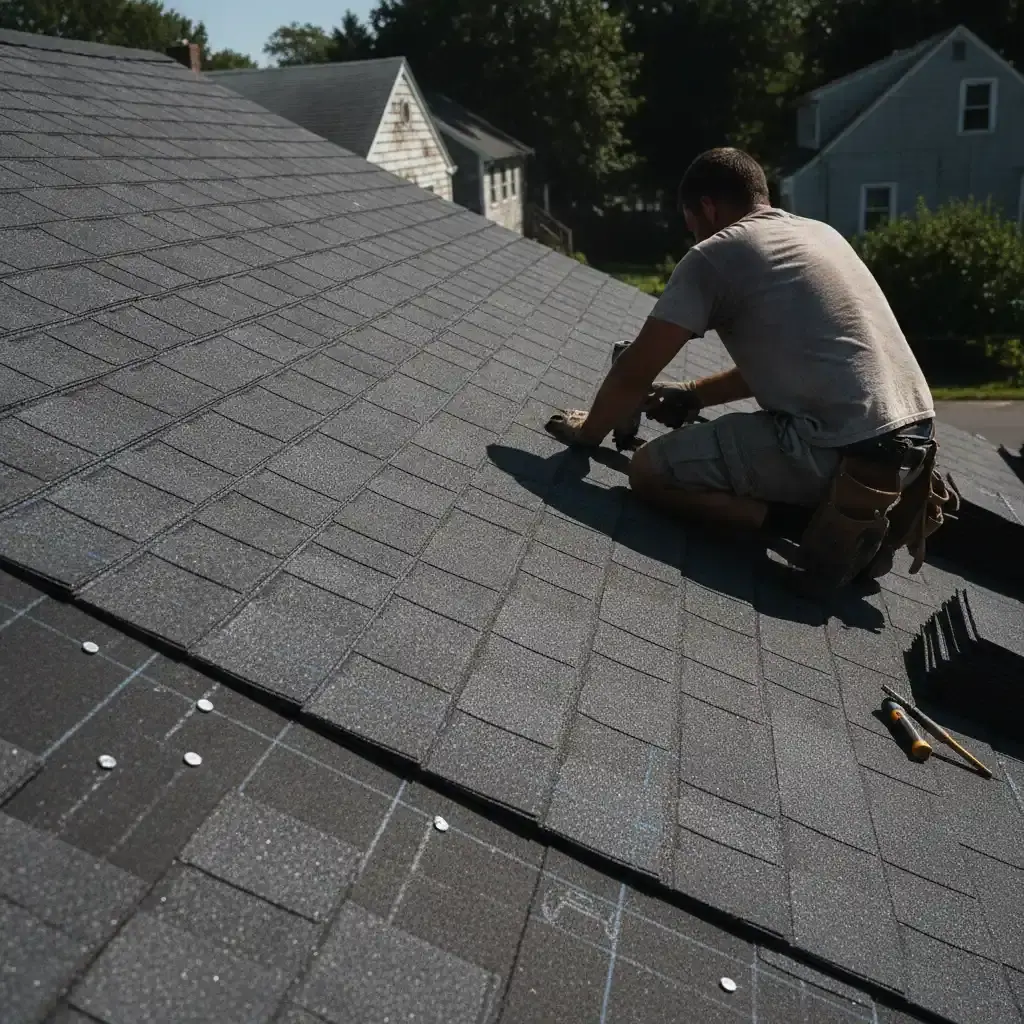
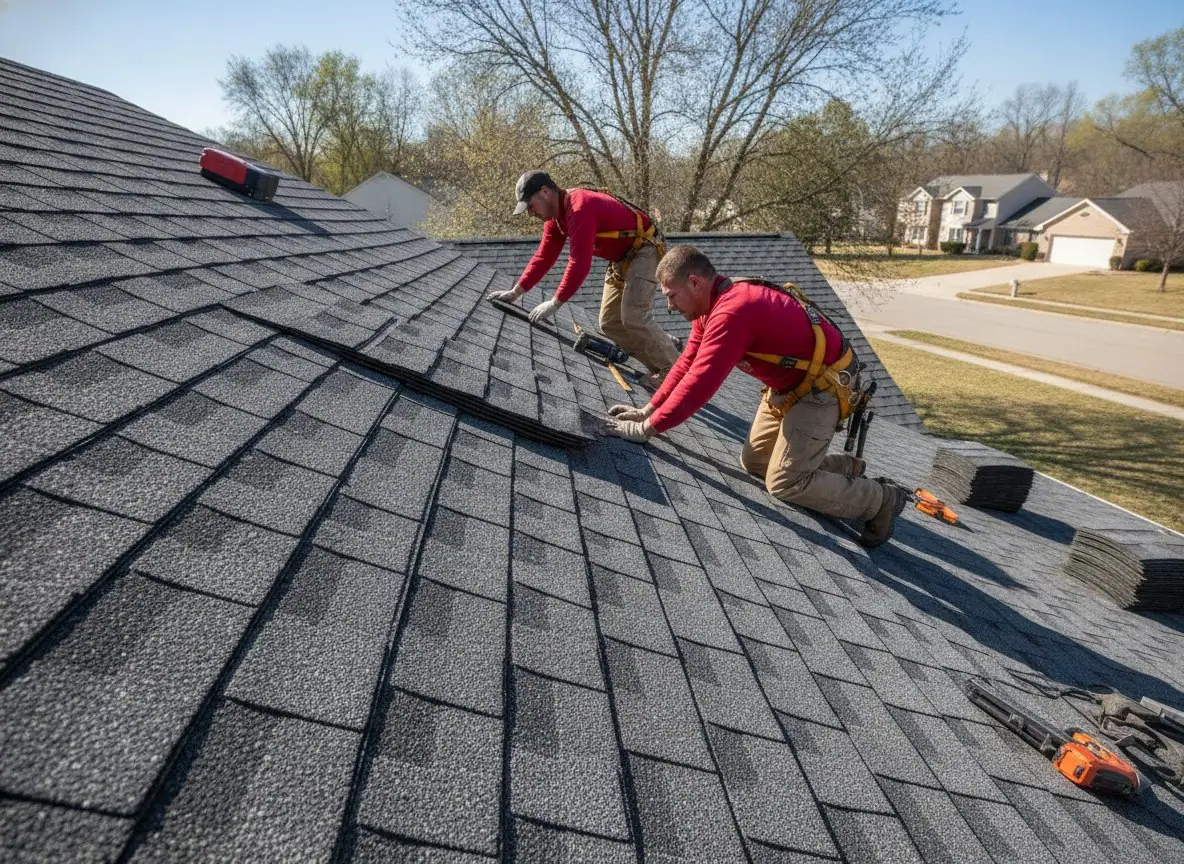
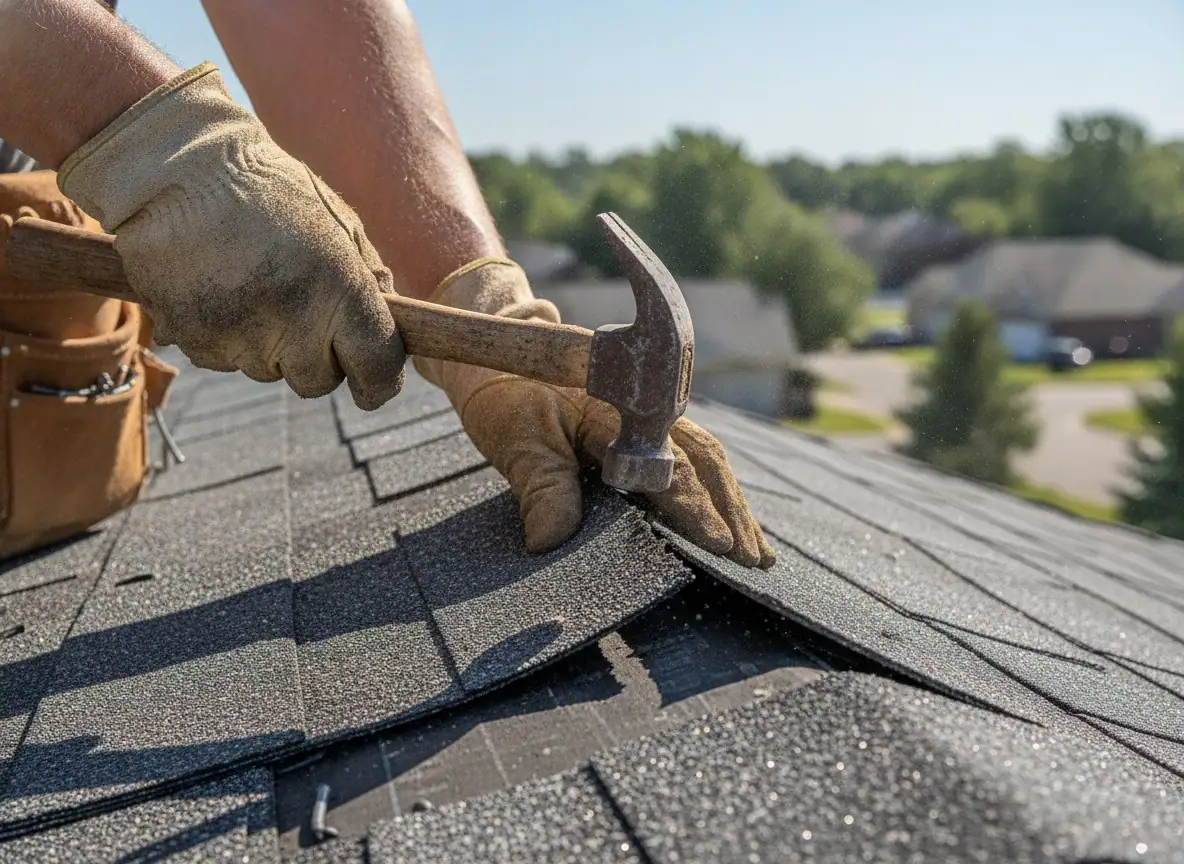
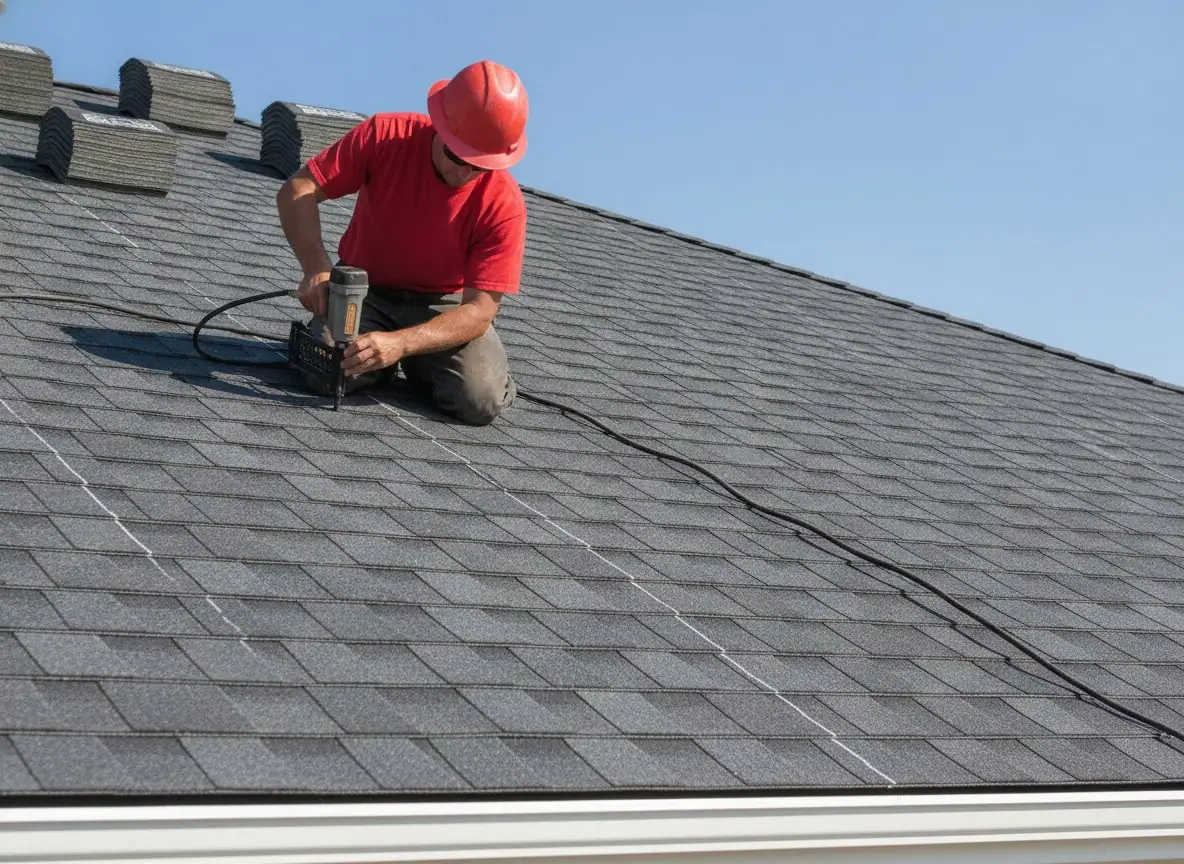
Shingle Installation (Installation Day 1–2 — Full Day)
Shingles are installed beginning at the eave and working upward in a staggered pattern. In Greater Boston’s high-wind exposure zones, we use a 6-nail fastening pattern rather than the standard 4-nail pattern. All ridge caps are installed with manufacturer-appr
- 07
Final Inspection and Cleanup (Installation Day 2 — 2 Hours)
We conduct a thorough final walkthrough, magnetic nail sweep of all surrounding areas, and photograph the completed installation for your records. A copy of all permit documentation is provided for your home’s records.
Installation Methods and Approaches
Full Tear-Off and Replacement
The most comprehensive approach, involving complete removal of all existing roofing layers down to bare decking. Recommended for Greater Boston homes with two existing shingle layers (prohibited from adding a third under 780 CMR), significant deck deterioration, or roofs over 20 years old. This method allows full deck inspection, correction of ventilation deficiencies, and installation of updated ice-and-water shield systems — particularly important for triple-deckers in Somerville and Malden where moisture management is critical.
Overlay Installation
New shingles are installed directly over a single existing layer in sound condition. Acceptable under Massachusetts code when the existing deck is structurally sound, the existing shingle layer is flat and undamaged, and proper fastener penetration depth can be achieved. This method reduces labor costs by 15–20% and is sometimes appropriate for newer homes in Canton, Norwood, and Dedham where a single shingle layer was installed in the 2000s.
Partial Replacement and Integration
When storm damage is localized — such as wind uplift affecting the south-facing slope of a Newton Colonial following a nor’easter — we can replace damaged sections and integrate new shingles with the existing field using color-matched materials. This approach requires careful slope analysis to ensure water drainage patterns are not interrupted.
High-Wind System Installation
For homes in coastal communities including Quincy Shore Drive, Lynn’s Nahant Road corridor, and Weymouth’s oceanfront neighborhoods, we specify Class H wind-rated shingles with enhanced adhesive strips and apply construction adhesive beneath the first three courses at eaves — the area most vulnerable to wind uplift in nor’easter conditions.
Cold-Weather Installation Protocol
Greater Boston’s roofing season must often extend into late November and early March to meet demand. Our cold-weather protocol includes hand-sealing every shingle tab with roofing cement when temperatures fall below 40°F, storing shingles in heated conditions prior to installation, and monitoring manufacturer temperature thresholds for each specific product.
Asphalt Shingle Roof Installation Cost in Greater Boston
Asphalt shingle roof installation costs in Greater Boston typically range from $7,500 to $22,000 for a complete residential installation, with most single-family homes falling between $9,500 and $15,000. These figures reflect Greater Boston’s elevated labor market — roofing labor rates in the Boston metro area run approximately 20–30% higher than national averages due to the competitive construction trades market and the specialized knowledge required for the region’s older housing stock.
Key Cost Factors
- Roof Size: Cost is typically measured in roofing squares (100 sq. ft.). Greater Boston’s single-family homes average 22–30 squares. Material and labor combined generally range from $400 to $700 per square depending on shingle grade.
- Shingle Grade: 3-tab shingles: $350–$450/square installed. Architectural shingles: $450–$575/square installed. Impact-resistant Class 4 shingles: $575–$750/square installed.
- Tear-Off Requirements: Full tear-off adds $75–$150 per square in labor and disposal costs. Boston-area dump fees and permit costs add $500–$1,500 depending on municipality.
- Deck Repairs: Deteriorated decking replacement runs $2.50–$5.00 per square foot — a common expense in Greater Boston’s pre-1950 housing stock.
- Complexity: Steep pitches (above 8:12), multiple dormers, or complex valley configurations — common in Victorian-era Brookline, Newton, and Jamaica Plain — add 15–25% to labor costs.
- Additional Components: New flashing, ventilation upgrades, and chimney saddles add $500–$2,500 depending on scope.
For an accurate estimate specific to your Greater Boston property, call Blue Hills Roofing Solutions at (617) 712-2287. Learn more about full roof replacement services and pricing
Greater Boston Neighborhoods We Serve
Milton and Canton
These Blue Hills Reservation communities feature a mix of mid-century ranch homes and Colonial Revivals built between 1950 and 1975. Elevation variations along the Ponkapoag ridgeline expose these roofs to above-average wind loads, and proximity to the Neponset River watershed creates elevated humidity conditions that accelerate shingle aging. Roof installation services in Milton, MA
Brookline and Newton
Among Greater Boston’s most architecturally complex communities, Brookline’s Pill Hill neighborhood and Newton’s Chestnut Hill district feature large Victorian and Tudor Revival homes with steep pitches, complex valley systems, and slate or wood shake roofs being converted to high-end architectural shingles. Brookline’s Preservation Commission guidelines require sensitivity to period-appropriate shingle aesthetics. Roof installation in Brookline, MA
Quincy and Weymouth
Granite City’s South Shore communities encompass everything from Quincy Center’s three-family properties to Weymouth’s post-WWII subdivisions. Coastal proximity along Quincy Bay creates salt-air exposure concerns, and many 1940s–1960s homes in these communities are encountering their second or third roofing cycle, requiring full tear-off protocols. Roof services in Quincy, MA
Somerville and Medford
These dense urban communities contain some of Greater Boston’s highest concentrations of wood-frame triple-deckers, most built between 1890 and 1920. Flat or low-slope rear sections on these structures require special attention to drainage and ice-and-water shield coverage to prevent the chronic ponding issues common in Davis Square and Magoun Square neighborhoods.
Asphalt Shingle Roof Maintenance Tips for Greater Boston Homeowners
- Annual Inspection Every Fall: Schedule a professional inspection each October before the nor’easter season begins. Early identification of lifted flashing or cracked shingles prevents winter water infiltration.
- Keep Gutters Clear: Greater Boston’s abundant deciduous tree canopy — particularly maples and oaks in Newton, Needham, and Wellesley — deposits heavy leaf loads in October and November. Clogged gutters are the primary cause of ice dam formation along eave overhangs.
- Remove Moss and Algae Promptly: Greater Boston’s humid summers promote algae streaking and moss growth, particularly on north-facing slopes. Apply zinc sulfate strips at the ridge to inhibit biological growth without damaging shingles.
- Never Walk on Shingles Unnecessarily: Foot traffic breaks granule bonds and creates micro-fractures in asphalt, accelerating aging especially on steep-pitch Victorian roofs.
- Ensure Proper Attic Ventilation: Verify that soffit and ridge vents are unobstructed. Boston’s heating seasons run roughly October through April — adequate ventilation prevents the heat buildup that causes ice dams and premature shingle deterioration from below.
- Address Flashing at the First Sign of Rust: Chimney and valley flashing on older Greater Boston homes is frequently galvanized steel, which has a 20–30-year lifespan. Rust streaking on shingles below flashing is a reliable early warning sign.
- Snow Removal on Flat Sections Only: Use a roof rake to remove snow accumulation exceeding 18 inches on low-slope sections, but avoid metal rakes that damage shingle surfaces. Explore our professional roof maintenance programs
Why Choose Blue Hills Roofing Solutions for Asphalt Shingle Roof Installation
Blue Hills Roofing Solutions is built specifically for Greater Boston’s unique roofing demands. We understand that installing a roof on a 1905 Somerville triple-decker is fundamentally different from roofing a 1960s ranch in Canton — and we bring the specialized knowledge, materials sourcing, and installation protocols each situation requires.
Our team works exclusively in the Greater Boston market, which means we maintain relationships with local building departments across all 19 communities we serve, understand the specific permit and inspection requirements in each municipality, and know which shingle products perform best under eastern Massachusetts coastal and inland conditions.
We serve homeowners across Milton, Quincy, Boston, Braintree, Randolph, Dedham, Canton, Brookline, Weymouth, Needham, Norwood, Medford, Newton, Waltham, Wellesley, Watertown, Malden, Somerville, and Lynn — bringing consistent quality and local expertise to every project.
Read moreShow less
Every installation includes a detailed written scope of work, photographic documentation, and all permit paperwork for your records. Our commitment to transparency and craftsmanship is what has made us a trusted name in Greater Boston roofing.
Call us today at (617) 712-2287 to schedule your free assessment. We also offer commercial roofing services across Greater Boston
FAQ
Frequently Asked Questions: Asphalt Shingle Roof Installation in Greater Boston
How much does asphalt shingle roof installation cost in Greater Boston?
Most Greater Boston homeowners pay between $9,500 and $15,000 for a complete architectural shingle installation on a typical single-family home. Factors including roof size, pitch complexity, tear-off requirements, and deck condition influence the final cost. Greater Boston labor rates run 20–30% higher than national averages, reflecting the specialized skills required for the region’s older housing stock and strict building code requirements.
How long does asphalt shingle roof installation take in Greater Boston?
Most residential installations are completed in 1–2 days for standard single-family homes. Complex roofs with multiple dormers, steep pitches, or significant deck repair needs may require 3–4 days. Permitting typically adds 3–7 business days before work can begin, depending on the municipality. We coordinate all permitting on your behalf.
What type of asphalt shingle is best for Greater Boston’s climate?
We most frequently recommend architectural (dimensional) shingles with a minimum 130 mph wind rating for inland communities, and Class 4 impact-resistant shingles for coastal communities like Quincy, Weymouth, and Lynn. All Greater Boston installations should include premium ice-and-water shield coverage extending at least 24 inches inside the interior wall line to manage ice dam risk during the region’s 48-inch average annual snowfall.
Can I install a new roof over my existing shingles in Massachusetts?
Massachusetts Building Code 780 CMR permits one layer of new shingles to be installed over one existing layer, provided the existing layer is flat, structurally sound, and fastener penetration depth requirements can be met. A second existing layer requires full tear-off before new shingles can be applied. Our inspection process determines which approach is appropriate and code-compliant for your specific home.
Do I need a permit for roof installation in Greater Boston communities?
Yes — all Greater Boston municipalities require building permits for full roof replacement and most significant repairs. Permit requirements vary slightly by town; Brookline, Newton, and Boston have more detailed inspection processes than some smaller communities. Blue Hills Roofing Solutions handles all permitting on your behalf, ensuring full compliance with local requirements.
How do I know if my Greater Boston home has ice dam problems?
Signs of ice dam vulnerability include: icicle formation along eave edges after snowfall, water staining on ceilings near exterior walls following winter storms, and visible frost on attic rafters during cold periods. Homes with cathedral ceilings, complex dormer configurations, or inadequate attic insulation — common in Greater Boston’s Victorian and Craftsman-era housing — are at highest risk. Our inspections specifically evaluate ice dam vulnerability and recommend ventilation upgrades where needed.
How long do asphalt shingles last in Greater Boston’s climate?
Quality architectural shingles installed with proper underlayment, ice-and-water shield, and ventilation systems typically last 25–30 years in Greater Boston’s climate. Entry-level 3-tab shingles often reach end-of-life in 15–20 years, particularly when subjected to repeated nor’easter wind loads and ice dam formation. The region’s 98 annual freeze-thaw cycles accelerate aging relative to warmer southern climates, making initial material quality selection especially important.
Do you offer emergency roofing services after storms in Greater Boston?
Yes — Blue Hills Roofing Solutions provides emergency tarping and temporary weatherproofing following nor’easters, wind events, and other storm damage across all 19 communities we serve. Contact us immediately at (617) 712-2287 for rapid response. Learn more about our emergency roofing services
Get Your Free Asphalt Shingle Roof Installation Estimate in Greater Boston
Your Greater Boston home deserves a roof built specifically for the demands of eastern Massachusetts winters, coastal nor’easters, and the architectural character of your neighborhood. Blue Hills Roofing Solutions brings the local knowledge, quality materials, and installation precision to deliver a shingle system that protects your home for decades to come.
Whether you’re in Milton, Quincy, Brookline, Newton, Somerville, or any of the communities we serve across Greater Boston, our team is ready to provide a thorough inspection and transparent, detailed estimate — with no obligation and no pressure.
Call us today at (617) 712-2287 to schedule your free roof assessment, or reach out through our website to request an estimate at your convenience. Don’t wait until the next nor’easter reveals a problem that could have been prevented.
Request your free roof installation estimate online
Get in touch
Find roofing help near you
Request a free estimate online or give us a call — our team will follow up quickly.
- Call us(617) 712-2287
- Visit2 Granite Ave Ste 512, Milton, MA 02186
- HoursMon-Sun 7am-7pm