Roof Installation in Greater Boston, MA
Expert Roof Installation for Greater Boston, MA Homes & Businesses
Blue Hills Roofing Solutions offers expert roof installation in Greater Boston, MA. Get a free estimate today — call (617) 712-2287 for local roofing specialists.
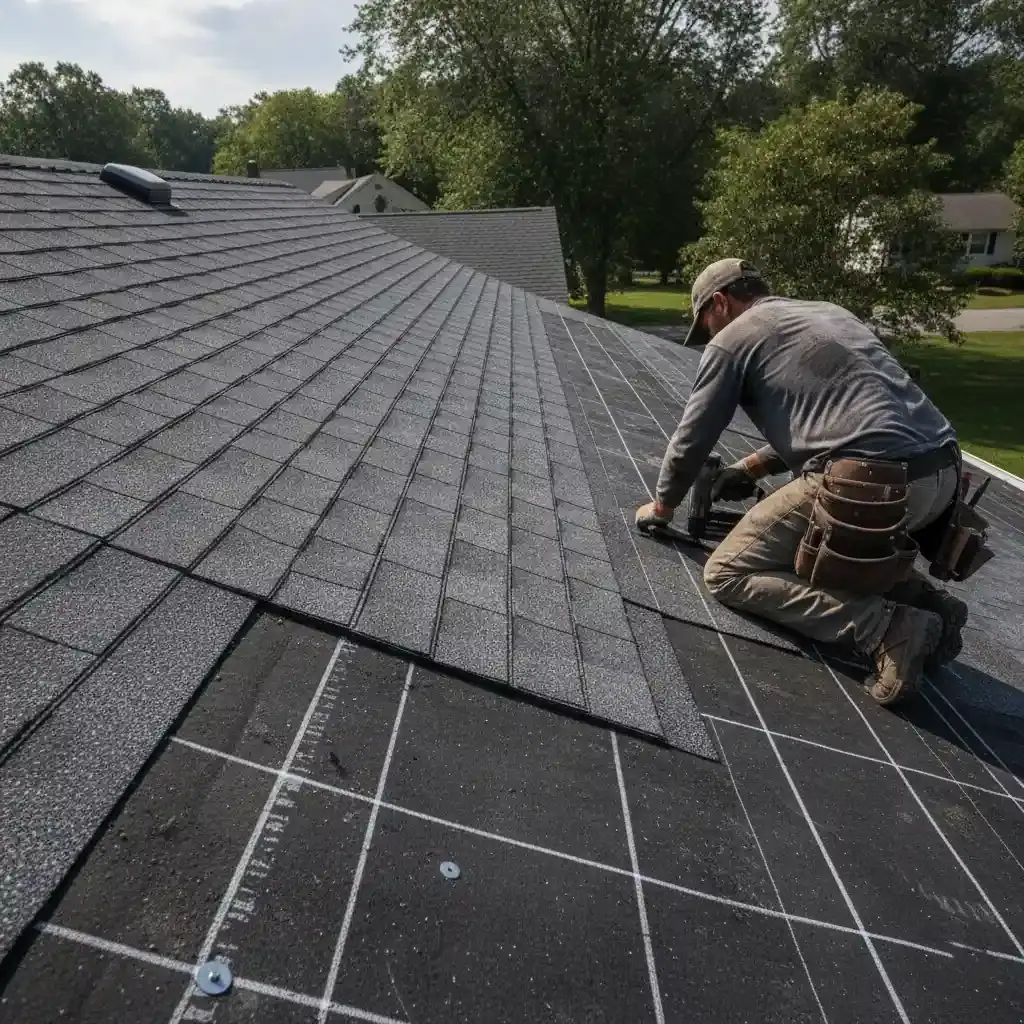
Roof installation is the process of designing, selecting materials for, and constructing a new roofing system on a residential or commercial structure — providing lasting protection against weather, moisture intrusion, and structural degradation. In Greater Boston, where nor’easters, freeze-thaw cycles, and historic building stock create unique demands, a properly installed roof is not a luxury but a necessity.
Greater Boston’s climate swings from brutal January ice storms to humid August heat waves, placing extraordinary stress on roofing systems year-round. Homes in neighborhoods like Beacon Hill, Jamaica Plain, and Newton Centre — many built between 1870 and 1940 — require installation approaches that respect historic architecture while meeting modern performance standards.
Read moreShow less
Blue Hills Roofing Solutions serves the entire Greater Boston area, bringing deep local knowledge, precision craftsmanship, and a commitment to quality that begins at the first measurement and extends through the final inspection. Whether you are building new or replacing a worn-out system, our team delivers roof installation designed specifically for Massachusetts conditions. Call us at (617) 712-2287 to schedule your free consultation.
Understanding Roof Installation in Greater Boston
Roof installation encompasses far more than simply laying shingles. It is a multi-layered system — beginning with the roof deck, moving through underlayment and ice-and-water barriers, and finishing with the outer surface material — each component engineered to work in concert with the others. When any layer is installed incorrectly, the entire system becomes vulnerable to failure.
Historically, Greater Boston’s roofing landscape reflects centuries of architectural evolution. The oldest neighborhoods in Boston proper, including the North End and Charlestown, feature flat or low-slope roofs on Federal and Greek Revival rowhouses dating to the early 1800s. Moving outward, Victorian-era triple-deckers in Somerville, Malden, and Lynn typically carry steep-pitch asphalt or slate roofs that require specialized installation techniques. Suburban communities like Needham, Wellesley, and Canton host large Colonial Revival and Cape Cod homes from the post-WWII building boom, where dimensional asphalt shingles and architectural roofing systems are the modern standard.
Read moreShow less
Massachusetts building codes — specifically the Massachusetts State Building Code (780 CMR) — mandate specific requirements for roof installation, including minimum slope requirements, fastener specifications, and ice-barrier underlayment extending at least 24 inches inside the interior wall line. In Greater Boston, the enforced ice-and-water shield requirement reflects the region’s documented history of damaging ice dams, which form when interior heat escapes through inadequately insulated roofs and melts snow that refreezes at the eaves.
Roofing materials common in Greater Boston include architectural asphalt shingles (the most widely installed), standing seam metal roofing (increasingly popular in Newton and Brookline), natural slate (common on historic Brookline and Back Bay residences), rubber (TPO and EPDM) flat roofing for commercial buildings in Quincy and Waltham, and composite materials designed to mimic slate or cedar shake. Each material has a defined service life, maintenance profile, and installation methodology that must align with the specific building type, roof geometry, and local climate exposure.
Understanding which system is right for your Greater Boston property requires an assessment that goes beyond aesthetics. Roof pitch, attic ventilation, existing insulation depth, structural load capacity, and neighborhood historic district guidelines all factor into the correct installation recommendation. Schedule a professional roof inspection to start the process with accurate data.
Signs You Need Roof Installation in Greater Boston
Structural Warning Signs
- Visible sagging or curvature in the roof deck when viewed from street level
- Soft spots or spongy feeling when walking on the roof surface
- Rafters or sheathing boards visible from the attic showing rot, mold, or separation
Surface Deterioration
- Shingles with significant granule loss — check downspout discharge for granule accumulation, a key indicator in Boston’s heavy-rain seasons
- Shingles that are curling, cupping, or cracking across multiple roof sections
- Exposed nail heads or missing shingles after nor’easter wind events
- Blistering or bubbling on flat roof membrane surfaces
Interior Moisture Indicators
- Water stains on ceilings or upper wall sections, particularly after snow melt or rainfall
- Ice dam water staining along exterior walls near eaves, common in Medford and Somerville triple-deckers
- Mold or mildew growth in attic spaces
- Daylight visible through the roof boards when viewed from the attic
Age-Based Urgency
- Asphalt shingle roof exceeding 20–25 years of age — common on Greater Boston homes re-roofed in the 1990s and early 2000s
- Two or more layers of shingles already present (Massachusetts code prohibits a third layer)
- Repeated repair costs totaling more than 30% of replacement value within a 3-year period
If you recognize two or more of these signs, contact Blue Hills Roofing Solutions for an emergency roof inspection before the next seasonal weather event.
Free, no-obligation estimates
Talk to Blue Hills Roofing Solutions
Tell us what you need and we’ll take it from there.
Our process
Our Roof Installation Process in Greater Boston
- 01
Free On-Site Consultation and Measurement (Day 1)
A Blue Hills Roofing Solutions project manager visits your Greater Boston property to conduct a thorough visual and physical assessment. We measure roof square footage, document slope angles, identify existing layers, inspect attic ventilation, and photograph
- 02
Detailed Written Estimate and Material Selection (Days 2–5)
We present a comprehensive written estimate including material specifications, labor breakdown, timeline, and permit costs. Our team guides you through material options suited to your specific building type, budget, and neighborhood aesthetic requirements.
- 03
Permit Acquisition (Days 5–10)
Blue Hills Roofing Solutions pulls all required building permits from your local municipality — whether Quincy City Hall, Milton’s Building Department, or the Boston Inspectional Services Department. We handle all documentation, ensuring compliance with Massac
- 04
Old Roof Tear-Off and Deck Preparation (Installation Day 1)
All existing roofing material is stripped to the deck. We inspect every sheathing board and replace damaged sections. In older Greater Boston homes, we frequently encounter original 1-by-6 skip sheathing that must be filled in or replaced with plywood before m
- 05
Underlayment, Ice-and-Water Shield, and Flashings (Installation Day 1–2)
We install continuous ice-and-water shield along all eaves, valleys, and penetration points — extending a minimum of 24 inches past the interior wall line per Massachusetts code. Synthetic underlayment covers the remaining field. All flashings — step, counter,
- 06
Roofing Material Installation (Installation Days 2–3)
New roofing material is installed per manufacturer specifications and Massachusetts code requirements, including high-wind fastening patterns for coastal communities. Ridge ventilation is installed or upgraded to ensure proper attic airflow — essential for pre
- 07
Final Inspection and Clean-Up (Installation Day 3–4)
A thorough quality inspection is conducted, followed by a municipal building inspector sign-off where required. All debris is removed and the property is magnetically swept for fasteners. You receive a final documentation package including permit sign-off, war
Roof Installation Methods and Approaches
Architectural Asphalt Shingle Installation
The most widely used method in Greater Boston residential roofing. Dimensional (architectural) shingles offer a 30-year or greater rated lifespan, strong wind resistance ratings up to 130 mph, and cost-effective installation. Best suited for Colonial, Cape Cod, and ranch-style homes throughout Milton, Dedham, Canton, and Braintree. High-wind fastening patterns — six nails per shingle rather than the standard four — are used in Lynn, Waltham, and coastal Weymouth.
Standing Seam Metal Roofing
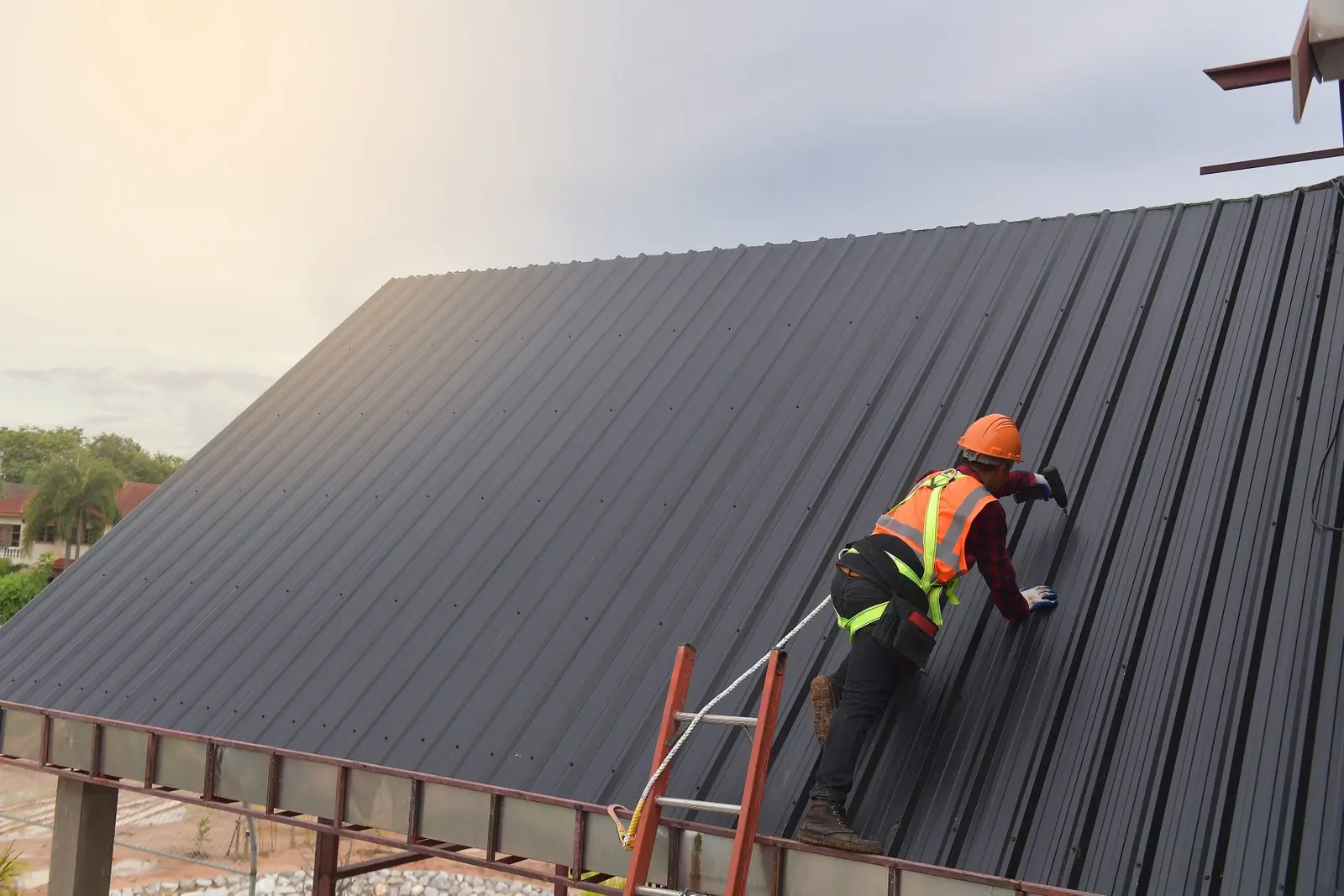
Increasingly specified on higher-end residential and commercial projects in Newton, Wellesley, and Brookline. Standing seam metal offers a 40–70 year lifespan, superior snow-shedding performance (reducing ice dam risk), and excellent resistance to freeze-thaw cycling. Snow guards are installed at eave edges to prevent sudden snow slides — a requirement in Greater Boston’s densely built neighborhoods where a snow slide could injure pedestrians.
Natural and Synthetic Slate Installation
Original natural slate roofs on Back Bay brownstones, Brookline Victorians, and Chestnut Hill estates require specialized installation with copper flashings and stainless steel slate hooks. Synthetic slate — lighter by 50–75% than natural slate — is used when structural load capacity is limited. Both require steep-pitch installation expertise and breathable underlayment systems.
Low-Slope and Flat Roofing (TPO/EPDM)
Flat and low-slope roofing systems are standard on Greater Boston’s triple-deckers, commercial buildings in Malden and Medford, and rear additions on rowhouses. TPO (Thermoplastic Polyolefin) and EPDM (rubber membrane) systems are installed with fully adhered or mechanically fastened applications, with minimum 1/4-inch-per-foot slope built in using tapered insulation to ensure positive drainage — critical in Boston’s high annual rainfall environment (averaging 47 inches per year).
Roof Installation Cost in Greater Boston, MA
Roof installation costs in Greater Boston reflect the region’s high labor market, strict code requirements, and the complexity of working on older and historic housing stock. Understanding the cost factors helps homeowners and property managers budget accurately.
Typical Price Ranges
- Architectural Asphalt Shingles: $8,500–$18,000 for an average 1,500–2,500 sq ft Greater Boston residential roof, including tear-off, underlayment, and all flashing work
- Standing Seam Metal: $18,000–$40,000+ depending on roof complexity and metal gauge
- Synthetic Slate: $14,000–$30,000 for residential applications
- TPO/EPDM Flat Roofing: $6,000–$15,000 for a 1,000–2,000 sq ft flat roof section, including tapered insulation
Read moreShow less
Key Cost Factors
- Roof complexity: Greater Boston’s Victorian and Colonial homes often feature multiple dormers, valleys, and chimney penetrations that add 15–30% to base installation cost
- Deck condition: Replacing deteriorated sheathing boards adds $2–$4 per square foot — a common cost factor on pre-1950 Greater Boston homes
- Permit fees: Boston and Brookline permit fees range from $150–$600 depending on project scope
- Story height and access: Three-story triple-deckers in Somerville and Malden require additional staging, adding to labor costs
- Historic district compliance: Properties in designated districts may require specific material approvals, adding time and potentially cost
Greater Boston labor costs run approximately 20–35% higher than national averages due to the region’s competitive trades market. Request a detailed written estimate from Blue Hills Roofing Solutions by calling (617) 712-2287. Compare roof installation versus roof replacement costs to make the most informed decision.
Neighborhoods We Serve in Greater Boston
Milton and Quincy
Milton’s residential neighborhoods feature many mid-century Colonial and Tudor-style homes that are now reaching the end of their original roofing lifespan. Quincy — one of Greater Boston’s most densely populated suburban cities — includes a mix of pre-war triple-deckers in Quincy Center and post-war ranch and split-level homes in Merrymount and Squantum. Coastal proximity in North Quincy and Wollaston demands salt-resistant flashing and high-wind fastening.
Brookline and Newton
Brookline’s Pill Hill and Chestnut Hill neighborhoods are home to some of Greater Boston’s finest historic residences, many with slate or clay tile roofs dating to the early 1900s. Newton’s diverse building stock — from Victorian-era homes in Newton Centre to mid-century ranches in Auburndale — requires versatile installation expertise. Both communities have active historic preservation oversight that affects material choices.
Somerville, Medford, and Malden
These inner-ring communities are defined by dense blocks of triple-deckers and two-families built between 1890 and 1930. Flat rear roof sections and steep front pitch combinations, minimal attic depth, and aging deck boards make these installations technically demanding. Ice dam history is particularly pronounced in these neighborhoods given the building typology.
Lynn and Weymouth
As coastal communities, Lynn and Weymouth present roofing challenges tied to ocean wind exposure, elevated humidity, and salt-air corrosion. Homes in these areas benefit from premium corrosion-resistant flashing materials and enhanced underlayment systems.
Roof Maintenance Tips for Greater Boston Homeowners
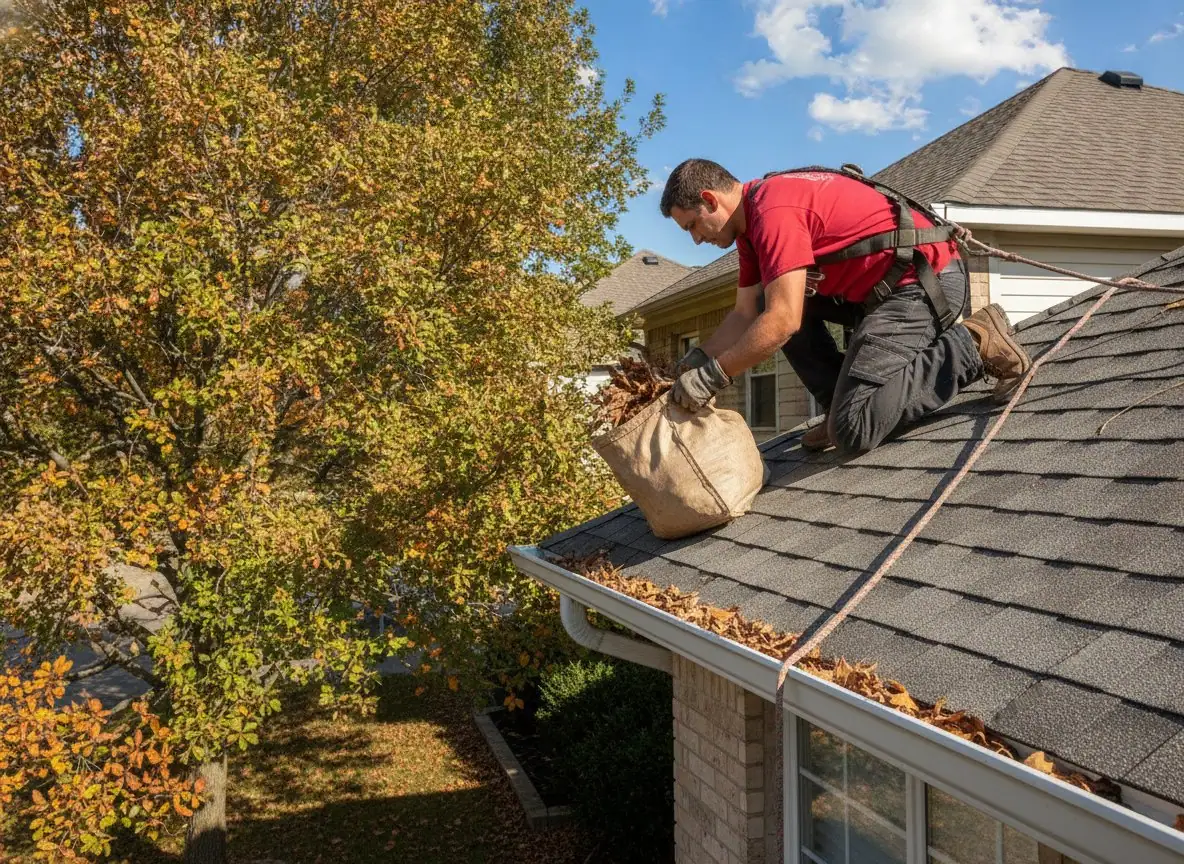
- Clear gutters every fall and spring: Greater Boston’s deciduous tree canopy — heavy in Dedham, Needham, and Wellesley — drops significant leaf volume that blocks drainage and contributes to ice dam formation.
- Inspect after every nor’easter: Following any storm with 50+ mph winds or 6+ inches of snowfall, visually inspect your roof from the ground for missing shingles or displaced flashing.
- Use a roof rake after heavy snowfall: Removing the first 3–4 feet of snow from eaves using a long-handled roof rake reduces ice dam formation risk significantly in Greater Boston winters.
- Maintain attic ventilation and insulation: Ensure attic insulation meets Massachusetts Energy Code minimums (R-49 for most Greater Boston climate zones) to reduce heat escape that causes ice damming.
- Inspect flashings annually: Chimney, skylight, and valley flashings are common failure points — especially after a freeze-thaw winter season. Look for lifted edges or cracks in sealant.
- Trim overhanging branches: Trees over rooftops in Canton, Milton, and Newton’s wooded neighborhoods increase debris accumulation and risk of impact damage during storm events.
- Schedule a professional inspection every 3–5 years: Annual or biennial professional inspections catch minor issues before they require full installation replacement.
Why Choose Blue Hills Roofing Solutions for Roof Installation in Greater Boston
Blue Hills Roofing Solutions is a Greater Boston-based roofing company with deep roots in the communities we serve. Our team has hands-on experience with the specific challenges posed by Greater Boston’s historic housing stock, coastal climate, and demanding winters. We don’t apply a one-size-fits-all approach — every installation plan is developed for your specific building, neighborhood, and exposure conditions.
We serve all 19+ communities across Greater Boston, from Milton and Quincy to Lynn and Wellesley, and our local knowledge means we understand the permit requirements, historic district considerations, and code standards specific to each municipality. Our installations adhere strictly to Massachusetts State Building Code 780 CMR and manufacturer specifications, ensuring both code compliance and maximum material performance.
Read moreShow less
We communicate transparently throughout every project — from the first consultation to the final inspection walk-through. Our written estimates are detailed and binding, with no hidden fees for standard project scope items. When you choose Blue Hills Roofing Solutions, you are choosing a team that treats your Greater Boston home with the same care and precision we would apply to our own. Contact us today or call (617) 712-2287 to get started.
FAQ
Frequently Asked Questions: Roof Installation in Greater Boston, MA
How much does roof installation cost in Greater Boston?
Roof installation in Greater Boston typically ranges from $8,500 to $18,000 for a standard asphalt shingle installation on an average 1,500–2,500 sq ft residential roof, including tear-off, ice-and-water shield, underlayment, and all flashings. Complex roofs with multiple dormers, steep pitches, or historic material requirements can reach $30,000 or more. Greater Boston labor costs run 20–35% above national averages.
How long does roof installation take in Greater Boston?
Most standard residential roof installations in Greater Boston are completed in 2–4 days of on-site work. Larger homes, complex roof geometries (common in Victorian-era Newton and Brookline properties), or projects requiring significant deck repair may take 5–7 days. Permit acquisition adds 5–10 business days before work begins, depending on the municipality.
What roofing material is best for Greater Boston’s climate?
Architectural asphalt shingles rated for high-wind and impact resistance offer the best balance of cost, performance, and longevity for most Greater Boston homes. For properties in coastal Lynn or Weymouth, premium shingles with enhanced wind ratings (130 mph+) are recommended. Standing seam metal is the top performer for ice-dam resistance and longevity, making it ideal for properties in Milton or Canton near the Blue Hills.
Do I need a permit for roof installation in Greater Boston?
Yes. All Greater Boston municipalities — including Boston, Quincy, Brookline, Newton, and others — require a building permit for full roof installation. Blue Hills Roofing Solutions pulls all required permits on behalf of homeowners as part of our installation process. Skipping the permit creates liability issues and can complicate homeowner’s insurance claims.
Can you install a new roof in winter in Greater Boston?
Yes, with conditions. Asphalt shingles require temperatures of at least 40°F for proper sealing. Greater Boston’s winter frequently offers windows of workable weather, and cold-weather installation techniques — including hand-sealing shingle tabs — allow safe installation in shoulder-season conditions. We monitor forecasts carefully and will not install in active precipitation or below-threshold temperatures.
How do I know if I need a full roof installation or just repairs?
If your roof is under 15 years old and damage is isolated to a single area — one section of missing shingles or one failed flashing — roof repair is typically the right choice. If the roof is over 20 years old, has widespread granule loss, or shows deck deterioration, a full installation is more cost-effective over a 5–10 year horizon. Our free inspection identifies which option makes financial sense for your specific property.
Does Blue Hills Roofing Solutions handle commercial roof installation?
Yes. We provide commercial roof installation across Greater Boston, including TPO, EPDM, and modified bitumen flat roofing systems for commercial buildings in Quincy, Waltham, Malden, and beyond. Commercial projects include fully engineered drainage designs, code-compliant insulation assemblies, and manufacturer-backed warranties.
What happens if my roof deck is damaged when you tear off the old roof?
Damaged or rotted deck boards are a common finding on pre-1960 Greater Boston homes. We inspect and document all deck conditions before and during tear-off. Replacement of damaged boards is priced per square foot and is addressed in your written estimate as a conditional line item. We never proceed over a compromised deck.
Get Your Free Roof Installation Estimate in Greater Boston Today
Don’t wait for the next nor’easter to reveal what your roof can’t handle. Whether you’re dealing with an aging system, post-storm damage, or simply planning ahead, Blue Hills Roofing Solutions is ready to provide an honest, detailed, no-obligation estimate for roof installation anywhere in Greater Boston — from Milton and Quincy to Lynn, Wellesley, and every community in between.
Our Greater Boston roofing specialists understand Massachusetts code requirements, local weather demands, and the unique construction characteristics of homes and buildings across this region. We bring that knowledge to every project, large or small.
Call us today at (617) 712-2287 to schedule your free on-site consultation. You can also submit a request through our contact page and a project manager will follow up within one business day. Protect your Greater Boston home — start with Blue Hills Roofing Solutions.
Get in touch
Find roofing help near you
Request a free estimate online or give us a call — our team will follow up quickly.
- Call us(617) 712-2287
- Visit2 Granite Ave Ste 512, Milton, MA 02186
- HoursMon-Sun 7am-7pm