Storm damage roof repair is the process of identifying, assessing, and restoring roofing systems that have been compromised by severe weather events — including high winds, hail, heavy snow loads, ice dams, and nor’easters that are a defining characteristic of New England’s climate. In Greater Boston, MA, where colonial-era homes sit alongside modern condominiums and decades of harsh Atlantic weather cycles take their toll year after year, storm damage to roofs is not a rare inconvenience — it is an inevitable reality for most property owners.
At Blue Hills Roofing Solutions, we specialize in diagnosing and repairing storm-damaged roofs across the Greater Boston region. Our team understands the unique architectural styles, building codes, and weather patterns that define this area. Whether you’re dealing with missing shingles after a nor’easter or interior leaks following an ice dam event, we bring the local expertise and technical skill needed to restore your roof quickly and correctly. Call us today at (617) 712-2287 for an immediate assessment.
Understanding Storm Damage Roof Repair
Storm damage roof repair encompasses a broad spectrum of restoration work performed on roofing systems following exposure to extreme weather. Unlike routine maintenance or scheduled replacement, storm damage repair is reactive — it addresses sudden, weather-induced structural compromise that can range from cosmetic surface issues to full-scale structural failures requiring emergency intervention.
Historically, New England’s building stock reflects generations of adaptation to a punishing climate. Colonial and Federal-style homes built throughout the 17th, 18th, and 19th centuries were typically constructed with steeply pitched roofs — a deliberate architectural response to heavy snowfall and wind-driven rain coming off the Atlantic. These steep pitches helped shed snow and ice, but they also created complex roof geometries with many valleys, ridges, and penetration points where water and ice can infiltrate when roofing materials fail.
Read moreShow less
Today, Greater Boston’s housing stock includes everything from 18th-century clapboard homes in Dedham and Milton to triple-deckers in Somerville and Malden, flat-roofed commercial buildings in downtown Boston, and post-war ranch-style homes in Braintree and Weymouth. Each of these building types presents unique vulnerabilities to storm damage. Flat roofs, common on commercial properties and some residential triple-deckers, are particularly susceptible to ponding water after heavy rain events. Steeply pitched roofs on older homes, meanwhile, often feature aging wood decking and original flashing details that deteriorate under repeated freeze-thaw cycles.
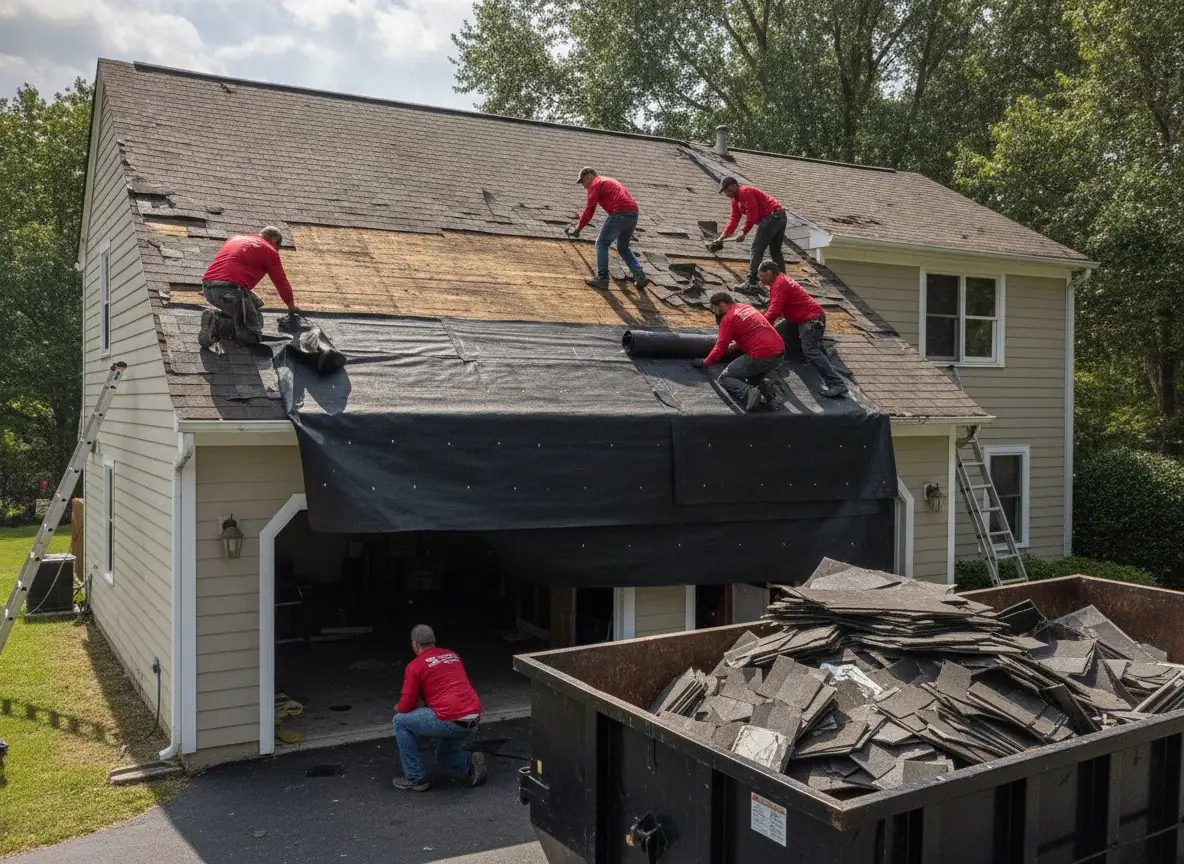
Storm damage repair typically involves removing compromised materials down to the decking, inspecting for hidden moisture intrusion, replacing damaged sheathing where necessary, installing new underlayment and flashing, and applying finished roofing materials that meet or exceed local building code requirements. In Greater Boston, the Massachusetts State Building Code (780 CMR) governs roofing work, and all repairs must account for wind uplift resistance ratings appropriate for a coastal climate zone. Understanding these regional code requirements is essential — it’s what separates a qualified local roofer from a storm-chasing contractor who moves from market to market after major weather events.
Storm damage roof repair is also closely tied to homeowner insurance claims, and navigating that process correctly can mean the difference between a fully covered repair and significant out-of-pocket costs. Blue Hills Roofing Solutions works alongside property owners throughout the documentation and claims process to ensure damage is properly recorded and presented.
Signs You Need Storm Damage Roof Repair
Exterior Warning Signs
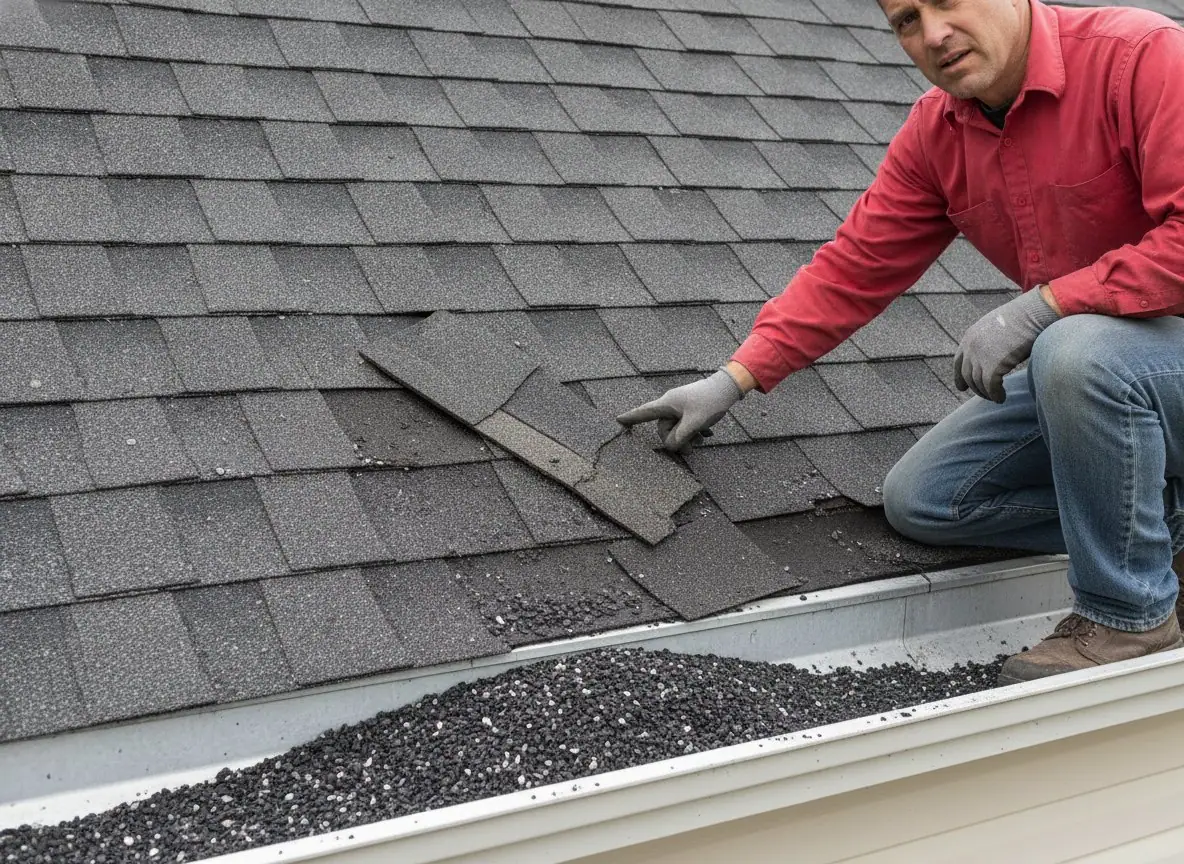
- Missing, cracked, curling, or lifted shingles visible from ground level
- Exposed or lifted ridge cap shingles along the peak of the roof
- Damaged, bent, or separated flashing at chimneys, skylights, vents, or valleys
- Dented or punctured metal components including gutters, downspouts, and vent covers (signs of hail impact)
- Visible granule accumulation in gutters or at downspout outlets following a storm
- Ice dam formations along roof eaves during or after winter storms
- Fallen tree limbs on or near the roof surface
Interior Warning Signs
- Water stains or active dripping on ceilings, especially near exterior walls, chimneys, or skylights
- Damp or discolored insulation visible in the attic space
- Daylight visible through the roof decking when inspecting the attic
- Mold or mildew odor in upper-floor rooms or attic spaces
- Sagging or soft spots on the ceiling drywall
Urgency Indicators
- Active water intrusion during or immediately after a storm — requires emergency tarping within 24–48 hours
- Structural sagging of the roof deck or ridgeline — indicates potential framing compromise
- Large sections of missing shingles exposing the underlayment or decking to the elements
Free, no-obligation estimates
Talk to Blue Hills Roofing Solutions
Tell us what you need and we’ll take it from there.
Our process
Our Storm Damage Roof Repair Process
At Blue Hills Roofing Solutions, we follow a structured, transparent repair process designed specifically for the Greater Boston climate and building stock. Here’s what you can expect when you call us after a storm event:
- 01
Emergency Response and Temporary Weatherproofing (Same Day – 24 Hours)
After major storms, active damage must be stopped immediately. We dispatch emergency crews to apply heavy-duty polyethylene tarps or peel-and-stick underlayment over breached areas to prevent further water intrusion while a permanent repair is planned. In wint
- 02
Comprehensive Roof Inspection (1–2 Days Post-Storm)
Our certified inspectors conduct a full roof inspection using both on-roof assessment and drone photography for areas that are steep, icy, or difficult to access safely. We document every instance of damage with time-stamped photographs — essential for insuran
- 03
Damage Report and Insurance Claim Support (2–5 Days)
We prepare a detailed written damage assessment and work alongside your insurance adjuster during their site visit. Greater Boston insurance adjusters are experienced with nor’easter claims, and our documentation format is designed to align with their inspecti
- 04
Material Selection and Procurement (3–7 Days)
We source materials that meet Massachusetts building code requirements, including wind uplift ratings appropriate for coastal and semi-coastal zones. For historic districts in Brookline, Newton, or Boston’s South End, we coordinate with local historical commis
- 05
Deck Preparation and Underlayment Installation (Day of Repair)
Damaged sheathing is removed and replaced with new OSB or plywood decking. We install ice-and-water shield membrane — mandatory under Massachusetts code along all eaves, valleys, and penetrations — with extra coverage in high-risk ice dam zones for homes in Ne
- 06
Finished Roofing and Flashing Installation (1–3 Days Depending on Scope)
New shingles, flashing, ridge caps, and any necessary accessories are installed to manufacturer and code specifications. All flashing is sealed with appropriate caulks rated for New England temperature extremes.
- 07
Final Inspection and Cleanup (Final Day)
We perform a post-installation walkthrough, including an attic inspection to confirm no moisture infiltration remains. All debris is removed from the property, and we provide you with documentation of completed work for your insurance file and future reference
Storm Damage Roof Repair Methods and Approaches
Spot Repair (Shingle-Level Replacement)
Used when damage is localized to a small area — typically fewer than 10 square feet — such as a handful of shingles lost in a windstorm or isolated impact damage from a fallen branch. Spot repair is cost-effective and minimally disruptive. It is most appropriate when the surrounding roof materials are in good overall condition with several years of remaining life. In Greater Boston, this method is commonly applied after summer thunderstorms or early-season nor’easters that cause limited but specific damage.
Section or Slope Replacement
When damage affects a significant portion of one roof slope — such as the south-facing slope that bears the brunt of nor’easter exposure on a Quincy colonial — replacing the entire affected section provides better long-term performance and a uniform appearance. This approach ensures the new materials integrate properly with the existing underlayment and flashing systems.
Full Roof Replacement Post-Storm
When storm damage is extensive, when the existing roof is already near the end of its service life, or when an insurance settlement covers full replacement, a complete tear-off and reinstallation is the most practical solution. We perform full replacements using architectural shingles rated for 130 mph wind resistance — appropriate for Greater Boston’s coastal exposure categories.
Ice Dam Remediation and Prevention
Specific to New England, ice dam repair involves not only addressing water intrusion damage but also correcting the attic insulation and ventilation conditions that allow ice dams to form. We work with insulation contractors to improve attic R-values and ensure proper soffit-to-ridge ventilation, a critical long-term solution for homes in Waltham, Medford, and Watertown.
Flat Roof Storm Repair
Commercial buildings and triple-deckers with flat or low-slope roofs require specialized repair approaches using TPO, EPDM, or modified bitumen membrane systems. Storm damage on flat roofs typically manifests as punctures, seam separations, or drainage failures that cause ponding. We restore these systems using heat-welded or adhesive-bonded patches and full membrane replacement where necessary.
Storm Damage Roof Repair Cost in Greater Boston, MA
Understanding storm damage roof repair costs in Greater Boston helps property owners plan appropriately and evaluate insurance settlements accurately. Costs vary significantly based on the scope of damage, roof complexity, materials selected, and current local labor market conditions.
Typical Cost Ranges
- Spot Repair (minor shingle replacement, flashing repair): $350 – $1,200
- Section Replacement (one slope or major area): $1,500 – $5,000
- Full Roof Replacement (average 2,000 sq ft home): $8,500 – $18,000
- Ice Dam Damage Repair (including interior remediation): $2,500 – $12,000 depending on extent of water intrusion
- Emergency Tarping: $400 – $900 depending on roof size and access difficulty
- Flat Roof Membrane Repair: $1,200 – $6,500 depending on membrane type and damage area
Read moreShow less
Factors That Affect Storm Damage Roof Repair Cost in Greater Boston
- Roof pitch and complexity: Steep colonial roofs and gambrel-style roofs in Milton and Dedham require more labor hours and safety equipment than moderate-pitch roofs.
- Material costs: Greater Boston material costs run 15–25% above national averages due to regional supply chain and labor market factors.
- Historic district requirements: Homes in Brookline’s historic districts or Boston’s South End may require specific materials approved by local commissions, adding 10–20% to material costs.
- Permit fees: Roofing permits in Massachusetts municipalities typically range from $150 to $500 depending on project scope and jurisdiction.
- Insurance deductibles: Most homeowner policies in Massachusetts carry deductibles of $1,000–$2,500 for storm damage claims; some coastal properties carry wind/hail deductibles of 1–2% of dwelling value.
We provide free, written estimates with itemized line items so you can compare proposals accurately. Request a Free Storm Damage Estimate
Storm Damage Roof Repair Neighborhoods We Serve in Greater Boston
Milton and Canton
Milton and Canton feature substantial numbers of late 19th and early 20th century colonial revival and Victorian homes with complex rooflines, multiple dormers, and original slate or early asphalt shingle installations. Storm damage in these communities often reveals aging underlayment and deteriorated valley flashing beneath newer shingles. We are experienced in working with Milton’s older building stock and navigating Norfolk County permit requirements.
Quincy and Weymouth
These coastal South Shore communities face the highest wind exposure in our service area. Many post-war ranch homes and split-levels in Quincy’s Germantown and Merrymount neighborhoods have lower-pitched roofs particularly vulnerable to wind uplift. Salt air corrosion of metal components requires the use of stainless steel fasteners and aluminum or copper flashing during all repairs.
Brookline and Newton
These affluent inner suburbs contain significant numbers of large Victorian, Tudor, and Arts and Crafts homes with slate roofs, complex valleys, and ornate copper flashing. Ice dam damage is common and costly in these neighborhoods. Many properties fall within local historic districts requiring careful material matching and commission coordination.
Somerville, Malden, and Medford
Dense urban neighborhoods dominated by triple-deckers and multi-family wood-frame buildings with low-slope roofs. Storm damage here often affects flat roof membranes and parapet walls. Quick response is critical in these densely packed neighborhoods where water intrusion can affect multiple units simultaneously.
Roof Maintenance Tips to Reduce Storm Damage in Greater Boston
Proactive maintenance dramatically reduces storm damage severity and repair costs. Here are eight maintenance practices specifically relevant to Greater Boston homeowners:
- Schedule biannual roof inspections — once in late October before nor’easter season and once in April after winter — to identify vulnerabilities before storms strike. Learn About Our Roof Inspection Services
- Clean gutters and downspouts in November before the first freeze to ensure proper drainage and reduce ice dam formation risk.
- Improve attic insulation to R-49 or higher as recommended for Massachusetts Climate Zone 5, reducing the heat loss that causes ice dams on your roof deck.
- Trim overhanging tree limbs to at least 10 feet from your roofline — a critical step given the number of large oaks and maples in Milton, Needham, and Dedham neighborhoods that cause significant impact damage during nor’easters.
- Inspect and reseal flashing annually at all chimneys, skylights, and vents, as Greater Boston’s freeze-thaw cycles loosen sealant faster than in milder climates.
- Install an ice-and-water shield membrane during any re-roofing project — mandatory under Massachusetts code but essential for all Greater Boston homes.
- Check soffit and ridge vents for blockages each fall to maintain proper attic airflow that reduces ice dam formation.
- Document your roof’s condition with photographs annually to establish pre-storm baseline documentation useful for insurance claims.
Why Choose Blue Hills Roofing Solutions for Storm Damage Roof Repair in Greater Boston
When a storm damages your roof, you need a contractor who knows Greater Boston — not a storm-chasing crew from out of state that disappears once the work is done. Blue Hills Roofing Solutions is a locally rooted company that serves the communities where our team lives and works, including Milton, Quincy, Newton, Brookline, Medford, and across the Greater Boston region.
We bring specific expertise in the roofing challenges unique to New England: nor’easter damage patterns, ice dam prevention and remediation, coastal salt air corrosion, and the complex historic rooflines found throughout Greater Boston’s neighborhoods. Our team understands Massachusetts building codes and municipal permit requirements across every community in our service area.
Read moreShow less
We provide transparent, itemized written estimates so you understand exactly what you’re paying for. We support you through the entire insurance claims process, from initial damage documentation through adjuster meetings and final settlement. We use materials rated and warranted for New England’s demanding climate — not the minimum-spec products some contractors install to maximize margins.
Call Blue Hills Roofing Solutions at (617) 712-2287 for honest, expert storm damage roof repair you can rely on. Schedule Your Free Inspection Today
FAQ
Frequently Asked Questions About Storm Damage Roof Repair in Greater Boston
How much does storm damage roof repair cost in Greater Boston, MA?
Storm damage roof repair costs in Greater Boston range from approximately $350 for minor spot repairs to $18,000 or more for full replacements on larger or more complex homes. The average insurance claim for nor’easter roof damage in the Greater Boston area typically falls between $4,000 and $10,000. Factors including roof pitch, material type, extent of damage, and historic district requirements all influence final cost. We provide free written estimates after a comprehensive inspection.
Does homeowner’s insurance cover storm damage roof repair in Massachusetts?
Yes, in most cases. Standard homeowner’s insurance policies in Massachusetts cover storm damage caused by wind, hail, and ice — including damage from nor’easters and ice dams when the damage is sudden and accidental. However, insurers may dispute claims for roofs that show evidence of pre-existing neglect or deferred maintenance. Proper documentation by a qualified roofing contractor is critical. Blue Hills Roofing Solutions assists clients throughout the claims process, from initial inspection documentation through adjuster meetings.
How quickly can you respond to storm damage in Greater Boston?
We offer emergency response services and can typically deploy for emergency tarping and initial assessment within 24 hours of a major storm event. During peak storm season — particularly after significant nor’easters — response times may extend slightly due to high demand. We prioritize active water intrusion situations to prevent secondary damage. Call us immediately at (617) 712-2287.
How long does storm damage roof repair take?
Simple spot repairs can be completed in a single day. Section replacements typically take one to two days. Full roof replacements on average Greater Boston homes require two to four days of active work. The full timeline from initial inspection to completed repair — including the insurance claims process — typically runs two to six weeks. We work to minimize interior exposure time by prioritizing temporary weatherproofing immediately after inspection.
What is an ice dam, and should I be worried about it in Greater Boston?
An ice dam is a ridge of ice that forms at the edge of a roof when heat escaping through the attic melts snow on the upper roof, which then refreezes at the cold eaves. Ice dams trap liquid water behind them, forcing it under shingles and into the building envelope. Ice dams are extremely common in Greater Boston, particularly in older neighborhoods in Newton, Needham, Waltham, Wellesley, and Medford where homes were built before modern insulation standards. They caused hundreds of millions of dollars in damage during the record 2014–2015 winter. Yes, if you own a home in Greater Boston, ice dams are a genuine concern that warrants preventative action.
Do I need a permit for storm damage roof repair in Massachusetts?
In most Massachusetts municipalities, roofing work that involves replacement of shingles or structural components requires a building permit. Permit requirements and fees vary by town — Boston, Brookline, Newton, and Quincy all have specific processes. Blue Hills Roofing Solutions handles permit applications as part of our service so that all work is properly documented and legally compliant. Unpermitted roofing work can create problems during home sales and insurance claims.
Can you match my existing shingles after storm damage repair?
For spot and section repairs, we make every effort to source shingles that match the color and profile of your existing roof. However, due to weathering, dye lot variations, and manufacturer product changes, an exact visual match is not always achievable — particularly on roofs more than five years old. During your inspection, we will assess the match quality honestly so you can make an informed decision about whether to pursue a section replacement or full replacement for the best aesthetic result.
Are you familiar with historic district requirements in Greater Boston communities?
Yes. We have experience working with historic district commissions in Brookline, Newton, Boston’s South End, and other protected neighborhoods across Greater Boston. We understand the material specifications and approval processes required for roofing work on properties within designated historic districts, and we can guide you through the commission approval process as part of your project.
Contact Blue Hills Roofing Solutions for Storm Damage Roof Repair in Greater Boston
Don’t wait after a storm. Every hour that a compromised roof is exposed to the elements increases the risk of water intrusion, structural damage, mold growth, and costly interior repairs. Blue Hills Roofing Solutions is ready to respond quickly, assess your damage thoroughly, and restore your roof to full performance — all while helping you navigate the insurance claims process with confidence.
We proudly serve homeowners and property managers across Milton, Quincy, Boston, Braintree, Randolph, Dedham, Canton, Brookline, Weymouth, Needham, Norwood, Medford, Newton, Waltham, Wellesley, Watertown, Malden, Somerville, and Lynn.
Call us now at (617) 712-2287 for emergency response or to schedule your free storm damage inspection. You can also submit a contact form online and we will respond promptly. Blue Hills Roofing Solutions — Greater Boston’s trusted storm damage roofing experts.
Get in touch
Find roofing help near you
Request a free estimate online or give us a call — our team will follow up quickly.
- Call us(617) 712-2287
- Visit2 Granite Ave Ste 512, Milton, MA 02186
- HoursMon-Sun 7am-7pm