Architectural Shingles in Greater Boston, MA
Expert Architectural Shingles in Greater Boston, MA — Storm-Tested, Warranty-Backed
Blue Hills Roofing Solutions installs architectural shingles across Greater Boston, MA. Get expert installation, fair pricing & a free estimate. Call (617) 712-2287 today.
Architectural shingles — also called dimensional or laminate shingles — represent the gold standard in residential roofing, combining multi-layer construction, enhanced durability, and rich visual depth that mimics the look of traditional cedar shake or slate. For homeowners across Greater Boston, architectural shingles offer a performance profile uniquely suited to New England’s demanding climate: heavy nor’easter snowloads, ice dam formation, coastal salt exposure, and freeze-thaw cycling that can destroy lesser roofing materials within a decade.
At Blue Hills Roofing Solutions, we specialize in the installation, replacement, and repair of architectural shingles throughout Greater Boston, MA and surrounding communities. Our crews understand the specific building stock of this region — from the Victorian triple-deckers of Somerville to the Colonial Revivals of Newton — and we tailor every project to the structural and aesthetic demands of your home. Call us today at (617) 712-2287 to schedule a no-obligation roof assessment.
Understanding Architectural Shingles
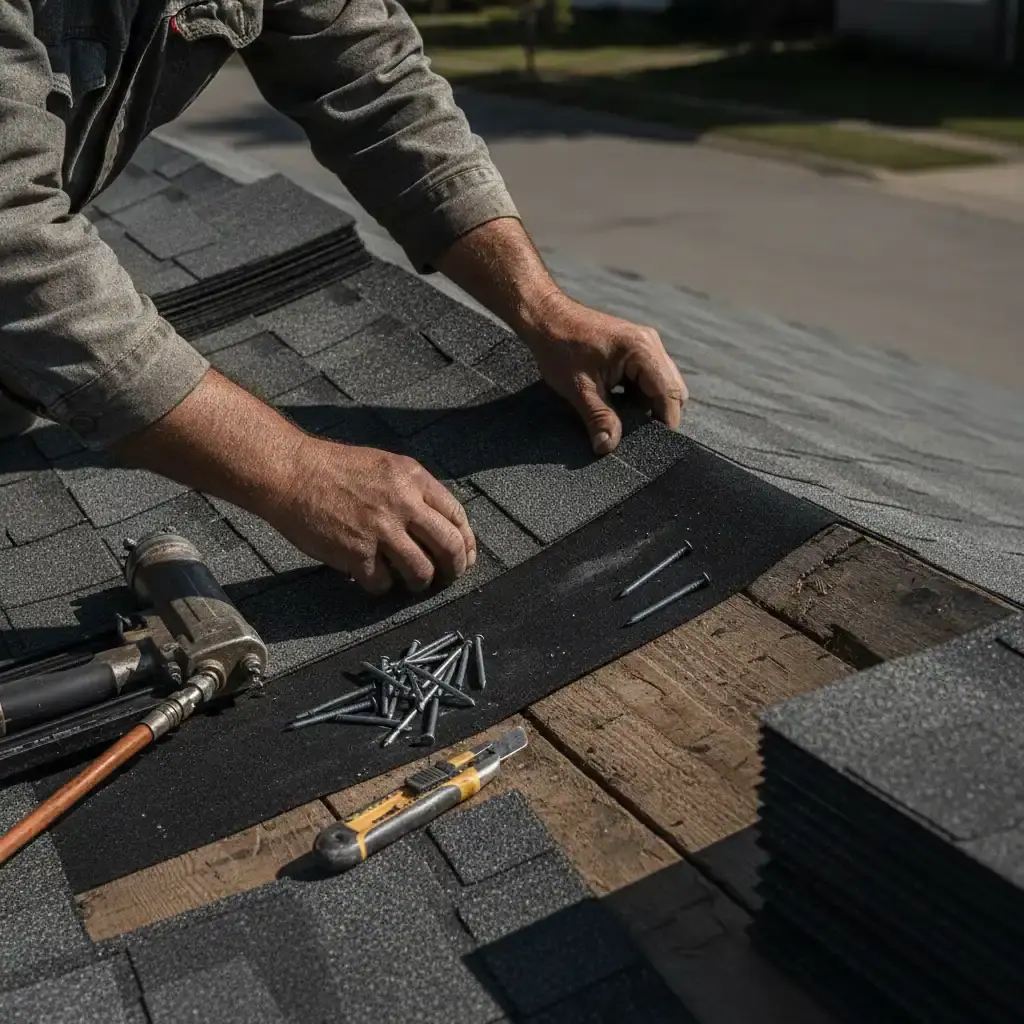
Architectural shingles were introduced to the residential market in the 1980s as a significant upgrade over traditional three-tab asphalt shingles. Where three-tab shingles are single-layer and uniform in profile, architectural shingles bond two or more layers of asphalt-saturated material together, creating a thicker, contoured tile with a distinctive shadow line that adds visual dimension to any roofline.
The construction process starts with a fiberglass mat core — significantly stronger than the organic felt used in older asphalt products — which is then coated on both sides with asphalt infused with mineral stabilizers. The exposed surface is embedded with ceramic-coated granules that reflect UV radiation, resist algae growth (a particular concern in Greater Boston’s humid summers), and provide the color variation that makes architectural shingles so aesthetically appealing. A factory-applied sealant strip activates under heat to bond shingles together and provide wind uplift resistance.
Read moreShow less
In Greater Boston, architectural shingles now account for the majority of new residential roof installations, largely displacing the three-tab products that dominated through the 1990s. This shift reflects both the improved affordability of dimensional products and growing homeowner awareness of long-term performance in a harsh climate. The region’s housing stock — which spans Colonial-era structures in historic districts like Beacon Hill, late-Victorian multi-families throughout Dorchester and Jamaica Plain, mid-century ranches in Dedham and Weymouth, and contemporary construction in suburban Newton and Wellesley — is broadly compatible with architectural shingle installation, making this one of the most versatile and widely applicable roofing solutions in the market.
Modern architectural shingles are rated to withstand winds from 110 mph to 130 mph depending on the product tier, carry impact-resistance ratings up to Class 4 (the highest available), and are backed by manufacturer limited lifetime warranties on premium lines. These specifications matter enormously in a coastal New England environment where Category 1 hurricane remnants and powerful nor’easters are seasonal realities.
Learn more about how architectural shingles compare to other products on our roofing materials guide page.
Why Architectural Shingles Are the Right Choice for Greater Boston Homes
Freeze-Thaw Cycling and Ice Dam Formation
Boston averages approximately 43.8 inches of snowfall per year, with significant additional accumulation during nor’easter events. When the January 2015 nor’easter cluster dropped a record 108.6 inches of snow on Boston over the course of the season — the highest on record — roofs across the region suffered catastrophic ice dam damage. Ice dams form when heat escaping through inadequately insulated attic spaces melts snow at the roof deck level; that meltwater refreezes at the cold eaves, creating ice barriers that force water under shingle edges and into the home.
Architectural shingles, properly installed with a continuous ice and water shield membrane extending at least 24 inches inside the exterior wall line (as required by Massachusetts State Building Code 780 CMR), provide a dramatically improved barrier against ice dam infiltration compared to three-tab products. The heavier, multi-layer construction resists the cracking and splitting that freeze-thaw cycling inflicts on lighter materials.
Coastal Salt Air and Wind Exposure
Communities along Boston Harbor — including Quincy, Weymouth, and the South Shore neighborhoods of Boston — face persistent salt air exposure that accelerates granule degradation on standard asphalt shingles. Architectural shingles with ceramic-coated granules and algae-resistant treatments hold up significantly longer in these micro-environments. Quincy’s Germantown and Merrymount neighborhoods, situated close to Wollaston Beach, see measurably faster shingle aging than inland communities at the same latitude.
Wind Uplift During Nor’easters
Boston’s position on the Massachusetts coast makes it vulnerable to sustained nor’easter winds consistently measuring 50–75 mph at the surface, with gusts exceeding 90 mph during major events. The February 2017 nor’easter produced wind gusts of 76 mph at Logan International Airport, stripping three-tab shingles from rooftops across Dorchester, East Boston, and Revere. Architectural shingles with high-definition sealant strips and 110+ mph wind ratings dramatically reduce blow-off risk during these events.
UV Degradation During New England Summers
While Boston winters dominate the conversation, summer UV radiation contributes substantially to shingle aging. Greater Boston averages 2,630 sunshine hours annually, and south- and west-facing roof planes on homes throughout Newton, Brookline, and Needham accumulate significant UV exposure that degrades asphalt binders over time. Premium architectural shingles with higher asphalt content and enhanced UV-stabilized granules maintain their waterproofing integrity and color vibrancy far longer than budget three-tab alternatives.
Aging Housing Stock
A significant portion of Greater Boston’s residential buildings were constructed between 1880 and 1960. Many of these homes have original roof structures with dimensional lumber rafters and board sheathing that present unique installation challenges. Architectural shingles can be installed over a single existing layer in many cases (per Massachusetts code), reducing tearoff costs on older homes while delivering modern performance. For homes in historic districts like Milton’s Columbine Road area or Brookline’s Pill Hill neighborhood, the dimensional shadow line of architectural shingles closely approximates the appearance of original slate without the structural reinforcement slate installation demands.
Free, no-obligation estimates
Talk to Blue Hills Roofing Solutions
Tell us what you need and we’ll take it from there.
Signs You Need Architectural Shingle Repair or Replacement
Visible Surface Deterioration
- Granule loss visible in gutters or at downspout discharge points — a primary indicator of advanced shingle aging
- Curling or cupping at shingle edges, particularly on south-facing slopes after summer UV exposure
- Cracking or splitting across shingle faces, common after severe winters
- Blistering or bubbling caused by moisture trapped within the shingle during manufacturing or installation
Structural Warning Signs
- Sagging or uneven roof planes visible from the street, indicating possible deck rot beneath the shingle layer
- Visible daylight through the attic rafters when inspected from inside
- Sheathing that feels spongy or soft underfoot during inspection
Interior Symptoms
- Water stains on ceiling drywall, particularly in top-floor rooms following rain events
- Mold or mildew odor in attic spaces — common in Somerville and Malden triple-deckers with limited ventilation
- Frost accumulation on attic rafters during winter, a sign of air infiltration
Age-Based Urgency
Most three-tab shingles installed in the 1990s have exceeded their design life and should be replaced promptly. Architectural shingles installed before 2005 may also be approaching end-of-service and warrant a professional inspection. Contact Blue Hills Roofing Solutions at (617) 712-2287 for a free roof inspection if your roof is 15 or more years old.
Our process
Our Architectural Shingle Installation Process
- 01
Initial Roof Assessment (Day 1 — 1 to 2 Hours)
Our project manager conducts a comprehensive inspection of your existing roof, attic ventilation, deck condition, flashing, and gutters. For Greater Boston homes, we pay particular attention to ice dam damage at the eaves, existing ice and water shield coverag
- 02
Detailed Written Estimate (Within 48 Hours)
We provide an itemized written estimate specifying shingle brand and product line, underlayment type, ice and water shield extent, flashing specifications, ventilation improvements if needed, and waste disposal. No hidden line items.
- 03
Material Selection and Procurement (3 to 7 Days)
We work with you to select an architectural shingle product appropriate for your home’s style, neighborhood character, and budget. For homes in historic districts — including parts of Brookline and Newton Centre — we can recommend products that align with loca
- 04
Existing Roof Tearoff (Day 1 of Installation — 4 to 8 Hours)
Our crews remove existing shingles down to the deck, disposing of all material in compliance with Massachusetts solid waste regulations. We protect landscaping with tarps and use magnetic rollers to capture fallen fasteners.
- 05
Deck Repair and Preparation (Day 1 — 2 to 4 Hours)
We inspect every square foot of roof sheathing, replacing any rotted or delaminated panels with 7/16-inch OSB or equivalent. In Greater Boston, deck rot is disproportionately common in homes with inadequate attic ventilation — we address ventilation deficienci
- 06
Underlayment and Ice Shield Installation (Day 1 — 1 to 3 Hours)
Per Massachusetts code and best practice for our climate, we install a self-adhering ice and water shield membrane across the entire eave, into all valleys, and around all penetrations. Synthetic underlayment covers remaining field areas.
- 07
Shingle Installation, Flashing, and Cleanup (Day 1 to Day 2)
Architectural shingles are installed starting at the eaves with proper starter course, following manufacturer nailing patterns for maximum wind resistance. All metal flashings are replaced new. Final magnetic sweep and site cleanup are completed before crew de
Architectural Shingle Methods and Approaches
Full Replacement (Tearoff and Reinstall)
The most comprehensive approach, recommended when the existing roof has reached end of life, shows significant deck damage, or already carries two shingle layers. Full replacement allows complete inspection and repair of the deck, ensures proper ice and water shield placement, and delivers the longest-lasting result. This is the standard approach for Greater Boston homes with roofs 20 or more years old.
Overlay Installation
Where Massachusetts code permits (one existing layer only, deck in sound condition), new architectural shingles can be installed directly over existing shingles. This reduces labor and disposal costs but limits the ability to inspect and repair the deck. We recommend overlay only for roofs in demonstrably good structural condition with single-layer existing coverage — common in post-1980 suburban construction in Dedham, Canton, and Norwood.
Partial Replacement and Repair
When damage is localized — such as storm blow-off on a single slope, or ice dam damage at the eaves — we can replace affected sections with matching architectural shingles. Color matching requires care on weathered roofs; we maintain manufacturer relationships that allow access to discontinued color lots when needed for Greater Boston’s older housing stock.
Impact-Resistant Architectural Shingles
For homeowners in exposed locations — coastal Quincy, elevated neighborhoods like Milton Hill, or areas with significant tree canopy risk such as Dedham’s Greenlodge neighborhood — we recommend Class 3 or Class 4 impact-rated architectural shingles. These products may qualify for homeowner’s insurance premium discounts in Massachusetts.
Cool Roof Architectural Shingles
Energy Star-rated architectural shingles with high solar reflectance values are available in select colors and are particularly effective for Boston urban heat island mitigation on exposed roof surfaces in dense neighborhoods like Somerville, Malden, and Medford.
Architectural Shingles Cost in Greater Boston, MA
Understanding architectural shingle pricing in Greater Boston requires accounting for local labor markets, disposal regulations, and material logistics specific to our region.
Typical Price Ranges
- Entry-level architectural shingles (full replacement): $7,500 – $12,000 for an average 1,500–2,000 sq ft ranch or Cape Cod home
- Mid-grade architectural shingles: $11,000 – $18,000 for a 2,000–2,800 sq ft Colonial or Victorian with moderate complexity
- Premium / designer architectural shingles: $16,000 – $28,000+ for large or architecturally complex homes in Wellesley, Newton, or Brookline
- Overlay installation (single-layer existing): 15–25% less than full tearoff equivalent
- Partial repair (per roofing square, 100 sq ft): $450 – $850 per square depending on accessibility and matching requirements
Read moreShow less
Greater Boston Cost Factors
Labor costs in the Greater Boston metropolitan area run 15–25% above national averages, reflecting the region’s high cost of living and specialized roofing workforce. Massachusetts requires licensed contractors for roofing work, and permit fees in municipalities like Newton and Brookline can add $300–$700 to project costs. Dumpster permitting in dense urban neighborhoods — Somerville, Medford, and parts of Boston — adds $150–$350. Disposal fees at Massachusetts-licensed construction debris facilities are also above the national average.
Material costs fluctuate with asphalt commodity prices. Homeowners should be cautious of bids that seem dramatically lower than the ranges above, as they often reflect unlicensed labor, inferior material grades, or inadequate ice shield coverage.
For a detailed, no-obligation estimate, call Blue Hills Roofing Solutions at (617) 712-2287 or visit our contact page.
Neighborhoods and Communities We Serve
Milton and Quincy
Milton’s historic district near the Blue Hills Reservation features a concentration of early-20th-century Colonial Revivals and Craftsman homes with complex rooflines, multiple valleys, and original slate that homeowners increasingly replace with architectural shingles for cost-effectiveness. Quincy’s dense neighborhoods — including Wollaston, Germantown, and Marina Bay — present a mix of Victorian multi-families and postwar ranches, with coastal salt exposure accelerating shingle aging along the waterfront.
Newton and Brookline
These affluent inner suburbs contain some of Greater Boston’s most architecturally significant residential stock: large Victorians, Tudor Revivals, and mid-century modern homes with steep-slope roofs. Homeowners here frequently invest in premium designer architectural shingle lines that approximate slate or wood shake aesthetics while meeting local historic district guidelines.
Somerville, Medford, and Malden
The dense triple-decker belt running through these communities presents unique challenges: limited access for equipment, shared property lines, and roofs that may not have been replaced since original construction in the 1910s–1930s. Our crews are experienced with the logistics of urban roof replacement in these environments, including street-use permitting and neighbor coordination.
We also serve Boston, Braintree, Randolph, Dedham, Canton, Weymouth, Needham, Norwood, Waltham, Wellesley, Watertown, Lynn, and all surrounding communities. View our full service area map.
Architectural Shingle Maintenance Tips for Greater Boston Homeowners
- Inspect after every major storm: After each nor’easter or named storm event, visually inspect your roof from the ground using binoculars. Look for displaced, missing, or cracked shingles and call for repairs before the next weather system arrives.
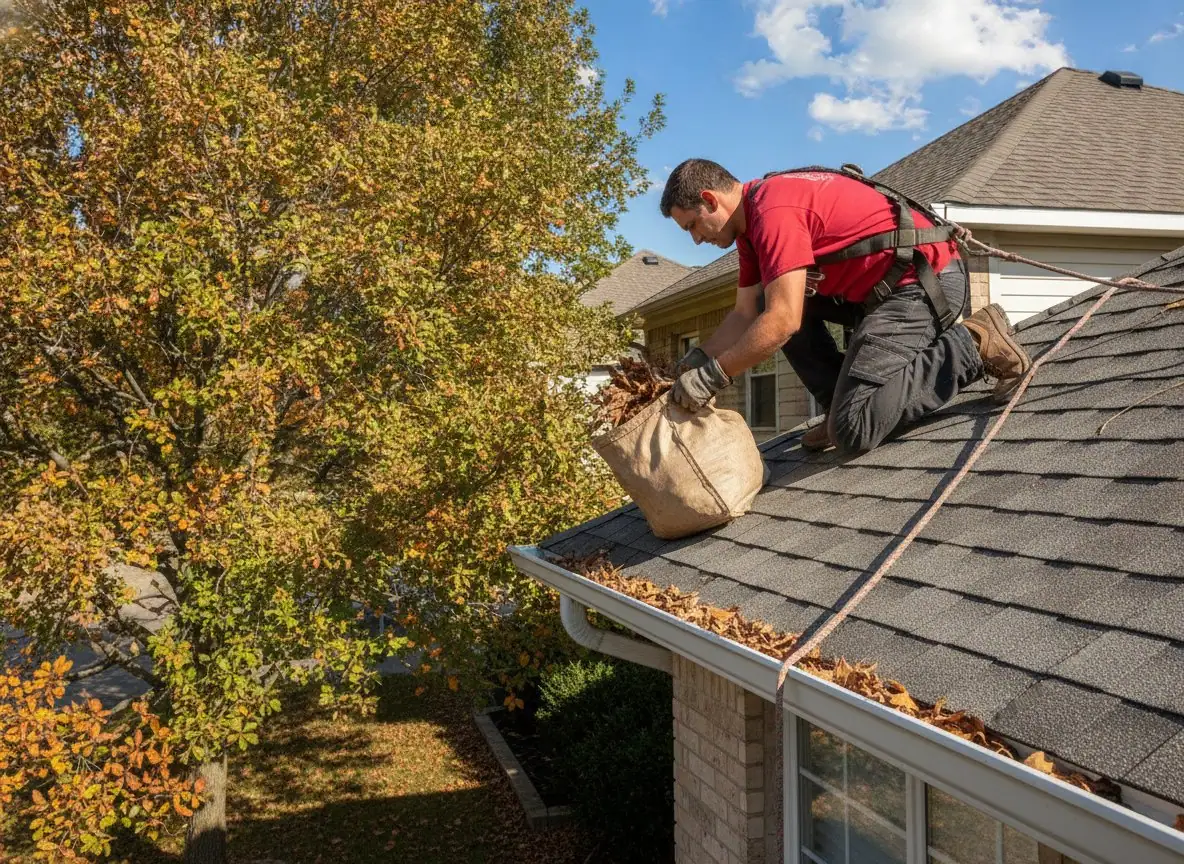
- Clean gutters twice annually: Greater Boston’s heavy tree canopy — particularly in Milton, Dedham, and Canton — deposits significant leaf and organic debris into gutters. Clean in late November after leaf fall and again in May. Clogged gutters accelerate ice dam formation.
- Address algae staining promptly: The black streaking common on north-facing slopes across Greater Boston is caused by Gloeocapsa magma algae. Treat with a 50/50 bleach-water solution or hire a professional soft wash service. Never pressure wash architectural shingles.
- Keep tree limbs trimmed: Overhanging branches deposit debris and can cause physical damage during ice storms. Maintain a 6-foot minimum clearance between limb tips and roof surface.
- Ensure adequate attic ventilation: Proper ventilation prevents ice dam formation in winter and reduces summer heat buildup that accelerates shingle aging. Target a 1:300 net free ventilation ratio for most Greater Boston homes.
- Schedule professional inspections every 3–5 years: Even healthy architectural shingles benefit from periodic professional inspection of flashings, sealants, and granule retention. Schedule your inspection here.
- Never walk on your roof unnecessarily: Foot traffic damages granule surfaces and can crack shingles that have become brittle in cold weather.
Why Choose Blue Hills Roofing Solutions
Blue Hills Roofing Solutions is a Greater Boston roofing company built around a single commitment: delivering architectural shingle installations that perform reliably through every nor’easter, every ice dam season, and every humid New England summer your home will face.
We work exclusively in Greater Boston and its immediate suburbs. We know the building inspectors in Newton and Brookline, the permit offices in Quincy and Weymouth, and the specific challenges that Somerville triple-deckers and Milton Colonials present. That local knowledge translates directly into faster permitting, fewer surprises on your project, and installations that meet or exceed Massachusetts Building Code requirements for our climate zone.
Read moreShow less
Our crews are experienced, background-checked, and led by project managers who are on-site for every installation — not managing from a distance. We use manufacturer-approved installation methods to ensure warranty compliance on every product line we install.
We serve every community from Lynn to Norwood, Waltham to Weymouth. Call us at (617) 712-2287 or explore our full services page to learn more.
FAQ
Frequently Asked Questions: Architectural Shingles in Greater Boston, MA
How long do architectural shingles last in the Boston climate?
Quality architectural shingles in Greater Boston typically last 25–35 years with proper installation and maintenance. Premium products from manufacturers like GAF, Owens Corning, and CertainTeed carry limited lifetime warranties, though the functional design life in a New England climate is generally 30 years for well-maintained roofs. Homes with inadequate ventilation or persistent ice dam issues may see shortened service life.
What does architectural shingle installation cost in Greater Boston?
For a full replacement on an average Greater Boston home (1,500–2,500 sq ft, moderate complexity), expect to invest between $9,000 and $20,000 depending on shingle grade, roof complexity, and municipality. Greater Boston labor and permitting costs are above national averages. We provide detailed written estimates with no hidden fees — call (617) 712-2287 to schedule yours.
Are architectural shingles better than three-tab shingles for Boston winters?
Yes, significantly. Architectural shingles are 50% heavier on average than three-tab products, with multi-layer construction that resists cracking, splitting, and blow-off in nor’easter conditions. They also provide a better substrate for ice and water shield adhesion at the eaves — a critical factor for ice dam performance in our climate.
Do I need a permit to replace my roof in Massachusetts?
Yes. Massachusetts requires a building permit for roof replacement in virtually all municipalities. Blue Hills Roofing Solutions pulls all required permits on your behalf as part of our standard process. Permit fees vary by municipality: Newton and Brookline tend to have higher fees ($400–$700) than smaller suburban communities ($150–$300).
How long does architectural shingle installation take?
Most full replacement projects on Greater Boston single-family homes are completed in one to two days. Larger or more complex roofs — such as multi-unit Victorian triple-deckers in Somerville or large Colonials in Wellesley — may require two to three days. We coordinate scheduling around weather forecasts and provide advance notice of any delays.
Can architectural shingles be installed in winter in Greater Boston?
Yes, with appropriate precautions. Architectural shingles can be installed in temperatures as low as 40°F without significant performance impact; below that threshold, we use hand-sealing techniques to ensure sealant strip adhesion. We do not install during active precipitation or on icy surfaces. Late fall and early spring installations are common in our region and are entirely serviceable.
What architectural shingle brands do you recommend for Greater Boston?
We most frequently install GAF Timberline HDZ, Owens Corning Duration, and CertainTeed Landmark Pro — all of which carry strong wind ratings (110–130 mph), algae resistance (important for Boston’s humid summers), and robust manufacturer warranty programs. For premium applications in Newton, Brookline, and Wellesley, we also install GAF Camelot II and CertainTeed Belmont designer lines.
Does my homeowner’s insurance cover architectural shingle replacement in Massachusetts?
Hail damage, wind damage from named storms, and certain ice dam damage are typically covered under standard Massachusetts homeowner’s policies. Wear and age-related deterioration is generally not covered. We assist customers with insurance documentation and can provide storm damage assessments for claim purposes. Contact us at (617) 712-2287 for storm damage evaluation assistance.
Get Your Architectural Shingle Estimate Today
Your roof is Greater Boston’s first line of defense against nor’easters, ice dams, and everything a New England winter delivers. Don’t wait for a water stain on your ceiling to take action.
Blue Hills Roofing Solutions is ready to assess your roof, answer your questions, and provide a detailed, no-pressure written estimate for architectural shingle installation or replacement anywhere in Greater Boston, MA.
- Call or text: (617) 712-2287
- Request an estimate online: Schedule Your Free Roof Assessment
- Learn about all our services: View All Roofing Services
We serve Milton, Quincy, Boston, Braintree, Randolph, Dedham, Canton, Brookline, Weymouth, Needham, Norwood, Medford, Newton, Waltham, Wellesley, Watertown, Malden, Somerville, Lynn, and all Greater Boston communities. Call today — our team is ready.
Get in touch
Find roofing help near you
Request a free estimate online or give us a call — our team will follow up quickly.
- Call us(617) 712-2287
- Visit2 Granite Ave Ste 512, Milton, MA 02186
- HoursMon-Sun 7am-7pm