A standing seam metal roof is a premium roofing system characterized by continuous panels that run vertically from the ridge to the eave, with raised interlocking seams that conceal all fasteners from weather exposure. This concealed-fastener design dramatically reduces leak points and delivers exceptional longevity — qualities that matter enormously in Greater Boston’s punishing four-season climate.
Greater Boston homeowners and commercial property managers face unique roofing challenges: nor’easters dropping 20-plus inches of snow in a single event, freeze-thaw cycles that crack traditional asphalt shingles, and coastal salt air from Massachusetts Bay that accelerates corrosion on conventional metal systems. Standing seam metal roofing, engineered to meet and exceed these demands, is an increasingly popular solution across Boston’s historic neighborhoods and newer suburban communities alike.
At Blue Hills Roofing Solutions, we specialize in standing seam metal roof installation, replacement, and repair throughout Greater Boston, MA. Call us today at (617) 712-2287 to schedule your free assessment.
Understanding Standing Seam Metal Roofing
Standing seam metal roofing is defined by its raised, vertical seams — typically protruding 1 to 2 inches above the flat panel surface — which lock adjacent panels together without any exposed screws or nails. The panels themselves are typically fabricated from Galvalume steel, aluminum, zinc, or copper, each offering a different performance and aesthetic profile. Aluminum, for instance, is especially popular in coastal Greater Boston communities because of its natural corrosion resistance to salt-laden air.
The concept of standing seam metalwork dates back centuries in America, with copper and tin standing seam roofs appearing on New England institutional buildings and churches throughout the 1700s and 1800s. Walk through Boston’s Beacon Hill or the South End today and you will still see original standing seam copper roofing on rowhouses and civic buildings that have protected residents for well over 100 years. This historical legacy is not merely aesthetic — it is proof of concept for Greater Boston’s climate.
Read moreShow less
Modern standing seam systems have evolved far beyond their historical predecessors. Today’s panels are manufactured with Kynar 500® PVDF paint coatings that resist fading, chalking, and UV degradation. They are available in snap-lock and mechanically-seamed profiles, with panel widths typically ranging from 12 to 18 inches. Hidden clip fasteners accommodate thermal expansion and contraction — a critical feature given Boston’s temperature swings of 100°F or more between January lows and July highs.
Standing seam metal roofs are appropriate for a wide variety of structures throughout Greater Boston. In residential applications, they excel on Colonial, Cape Cod, Victorian, and contemporary homes. On the commercial side, they are widely used on office buildings, medical facilities, schools, and mixed-use developments in communities like Newton, Brookline, and Waltham. Low-slope commercial variants using standing seam panels are also common on warehouses and industrial facilities in cities like Lynn and Medford.
The expected service life of a properly installed standing seam metal roof in the Greater Boston area is 40 to 70 years, compared to 15 to 25 years for standard three-tab asphalt shingles — making standing seam one of the most cost-effective long-term roofing investments available to Massachusetts property owners.
Why Standing Seam Metal Roofing Is Needed in Greater Boston, MA
Nor’easter Snow and Ice Loads
Greater Boston receives an average of 48 inches of snowfall per year, according to NOAA climate records for Boston Logan International Airport. Historically significant storms illustrate the extreme end of this range: the Blizzard of 2015 — a back-to-back series of storms in January and February — deposited over 104 inches of snow on Greater Boston in less than 30 days, collapsing roofs on commercial and residential buildings in Newton, Quincy, and Dedham. The smooth, low-friction surface of a standing seam metal roof encourages snow to shed naturally, reducing the static load that can overwhelm conventional asphalt shingle systems.
Freeze-Thaw Cycling and Ice Dams
Boston’s climate is classified as a humid continental climate (Köppen Dfb), marked by frequent freeze-thaw cycling — temperatures crossing the 32°F threshold an average of 40 or more times per winter season. This cycling is the primary engine behind ice dam formation, where meltwater refreezes at cold eave edges and forces water under traditional shingle courses. Neighborhoods with older, less-insulated housing stock — particularly the triple-deckers of Somerville, Malden, and Medford — are especially vulnerable. The concealed-fastener design and continuous panel run of a standing seam roof virtually eliminates the penetration points where ice dam damage begins.
Coastal Salt Air and Corrosion
Communities along Boston Harbor, Quincy Bay, and the South Shore — including Quincy, Weymouth, and Braintree — experience elevated atmospheric chloride levels from saltwater spray and fog. Conventional galvanized steel roofing components can show measurable corrosion within five to ten years in these salt-air environments. Standing seam metal roofs fabricated from aluminum alloy (Type 3004 or 3105) or zinc-coated Galvalume with Kynar-based coatings are specifically engineered to resist chloride-induced corrosion, providing superior service life in coastal Greater Boston locations.
Wind Uplift from Nor’easters and Tropical Remnants
Greater Boston is periodically impacted by post-tropical cyclones tracking up the Atlantic coast. Hurricane Bob in August 1991 caused catastrophic wind damage across eastern Massachusetts, and the remnants of Hurricane Ida in September 2021 brought sustained winds of 40 to 55 mph to the Greater Boston area. Standing seam metal roofing systems, when properly engineered and installed to ASCE 7 wind uplift standards, can withstand gusts in excess of 110 mph — far exceeding the performance of standard three-tab or architectural asphalt shingles.
Historic Building Stock and Long Replacement Cycles
Greater Boston contains one of the oldest concentrations of residential housing in the United States. The median age of housing units in Boston proper exceeds 60 years, and many communities — particularly Brookline, Milton, and Dedham — have significant Colonial Revival, Victorian, and Craftsman-era housing stock. For these historic and architecturally significant properties, a standing seam metal roof provides a period-appropriate aesthetic aligned with original New England roofing traditions, combined with modern performance that can outlast multiple asphalt re-roofing cycles.
Free, no-obligation estimates
Talk to Blue Hills Roofing Solutions
Tell us what you need and we’ll take it from there.
Signs You Need a Standing Seam Metal Roof in Greater Boston
Structural and Weathering Indicators
- Asphalt shingles showing granule loss, curling, cupping, or cracking — especially after Boston winters
- Visible sagging or uneven roof deck sections when viewed from the ground
- Recurring ice dam formation at eave lines each winter, causing interior water staining
- Shingle blow-offs following nor’easters or high-wind events, even when shingles appeared intact beforehand
Interior Water Damage Symptoms
- Water stains or active dripping inside attic space during or after heavy rain or snowmelt
- Mold or mildew growth on attic insulation, rafters, or interior ceilings
- Peeling paint or bubbling drywall on upper-floor ceilings in rooms directly below the roofline
Age and Maintenance History
- Existing asphalt shingle roof is 15 years or older — approaching end of useful service life in the Greater Boston climate
- Multiple repair events within the past three years with no lasting resolution
- Previous roofing contractor installed a second or third layer over existing shingles, adding excessive weight load
Urgency Indicators
- Active leak with visible daylight through roof deck — requires emergency roofing response
- Storm damage assessment revealing compromised flashing around chimneys, skylights, or dormers
If you recognize any of these signs, contact Blue Hills Roofing Solutions at (617) 712-2287 for an immediate inspection.
Our process
Our Standing Seam Metal Roof Installation Process in Greater Boston
Blue Hills Roofing Solutions follows a structured, transparent process adapted specifically for Greater Boston’s climate, building codes, and architectural styles.
- 01
Free Roof Assessment and Consultation (Day 1)
Our certified inspector evaluates your existing roof system, attic ventilation, insulation R-values, deck condition, and drainage patterns. For older Greater Boston homes — particularly pre-1950 structures common in Milton, Brookline, and Dedham — we assess or
- 02
Custom Project Proposal and Material Selection (Days 2–5)
We provide a detailed written proposal specifying panel profile (snap-lock vs. mechanically seamed), material gauge and alloy, color selection, and all associated components — underlayment, ventilation, and flashing. For coastal communities like Quincy and Wey
- 03
Permitting and Scheduling (Days 5–14)
We file all required building permit applications with local municipal building departments. Greater Boston municipalities — including Boston, Newton, and Brookline — require permits for full roof replacements. We coordinate permit approval timelines and sched
- 04
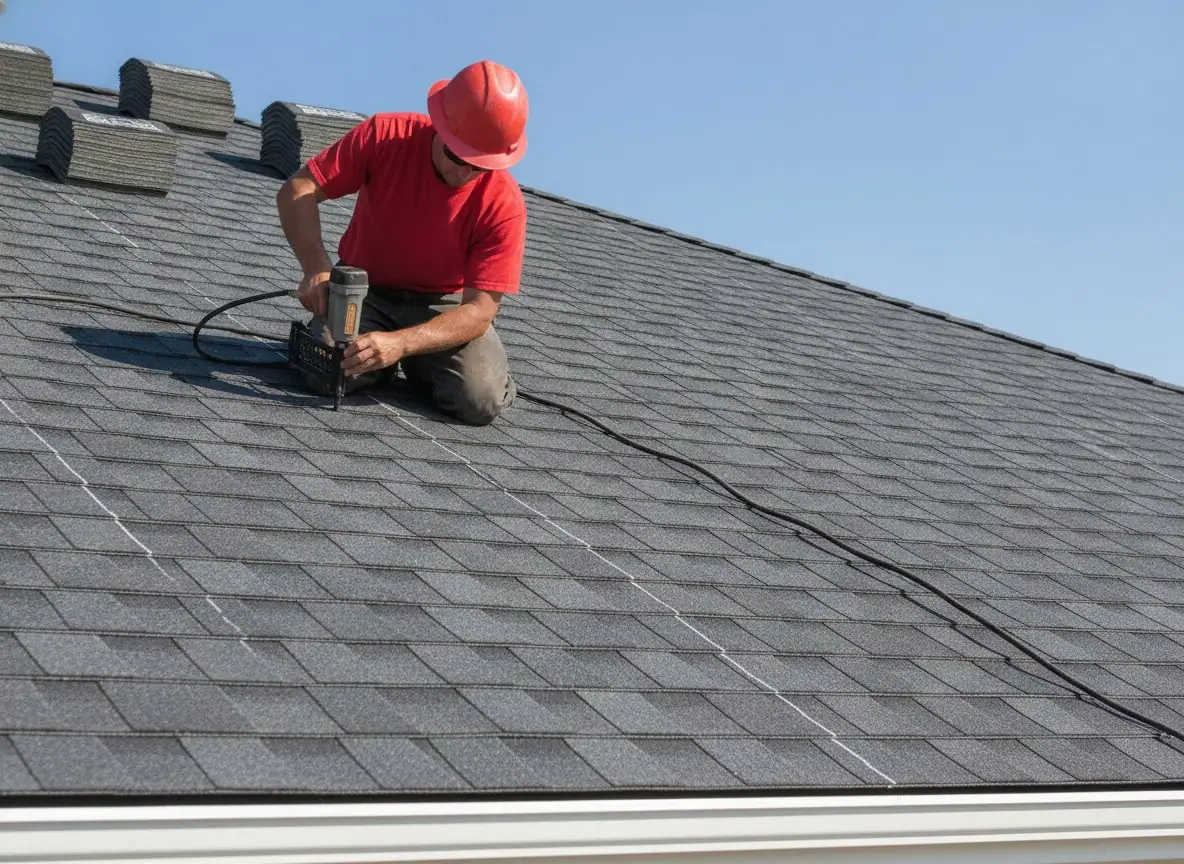
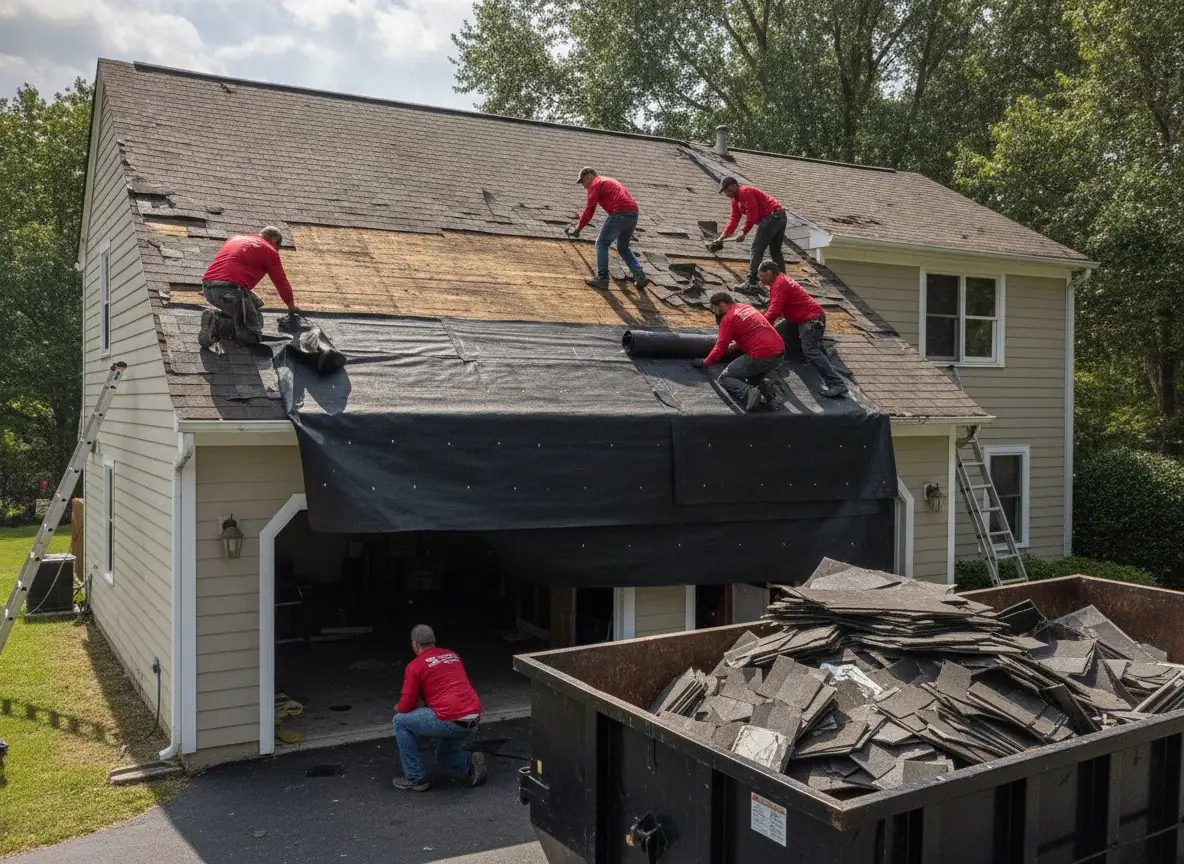
Existing Roof Removal and Deck Preparation (Day of Installation, Phase 1)
Complete tear-off of existing roofing material down to the deck. All rotted, delaminated, or ice-dam-damaged deck sections are replaced with new 5/8-inch CDX plywood. Boston’s Massachusetts State Building Code (780 CMR) requires a solid deck substrate for stan
- 05
Underlayment and Ice-and-Water Barrier Installation (Day of Installation, Phase 2)
We install self-adhering ice-and-water shield membrane a minimum of 36 inches (or to the interior wall line) up from all eaves — a Massachusetts code requirement designed specifically to address Greater Boston’s ice dam risk. A synthetic breathable underlaymen
- 06
Panel and Flashing Installation (1–3 Days Depending on Scope)
Standing seam panels are installed using concealed floating clips that allow thermal movement. All valleys, ridges, rakes, chimneys, dormers, and penetrations receive custom-fabricated aluminum or copper flashing. For historic homes in Beacon Hill or the South
- 07
Final Inspection and Site Cleanup (Final Day)
A comprehensive walk-through inspection verifies seam integrity, flashing terminations, fastener concealment, and drainage alignment. All job-site debris is removed, and magnetic sweepers are run across driveways and lawns to collect any stray metal fasteners.
Standing Seam Metal Roofing Methods and Approaches
Snap-Lock Standing Seam
Snap-lock panels feature a pre-formed seam that snaps together during installation without mechanical seaming equipment. This method is ideal for residential applications in Greater Boston neighborhoods like Newton, Needham, and Wellesley, where steep-slope residential roofs are common. Snap-lock systems accommodate thermal expansion through floating clip attachments and are typically the most cost-efficient standing seam option.
Mechanically Seamed (Double-Lock)
Mechanically seamed panels are rolled and crimped using an electric seaming tool, creating a double-fold seam that provides maximum weather tightness. This method is preferred for lower-slope roof sections (under 3:12 pitch), larger commercial applications in Waltham and Medford, and properties with high wind-uplift exposure such as rooftops in downtown Boston. Double-lock seaming achieves the highest air- and water-infiltration resistance ratings.
Batten Seam and Structural Standing Seam
Batten seam systems use a concealed wood or metal batten beneath raised panel edges, creating a broader, more pronounced seam profile. This approach is well-suited for historic restorations in Brookline and Milton, where architectural character must be preserved. Structural standing seam panels — spanning directly between purlins without a solid deck — are used on commercial and agricultural structures where deck costs are prohibitive.
Retrofit Over Existing Roofing
In select cases where the existing deck is structurally sound, a standing seam metal roof can be installed over existing single-layer asphalt shingles using a furring strip system that creates a ventilated air gap. This method reduces labor and disposal costs and is applicable on certain Greater Boston residential properties, subject to local building department approval and deck load analysis.
Standing Seam Metal Roof Cost in Greater Boston, MA
Understanding standing seam metal roof cost in Greater Boston requires considering both material selection and the region’s specific labor market and code requirements.
Typical Cost Ranges
- Galvalume Steel Standing Seam: $12 to $18 per square foot installed, including tear-off, for standard residential applications
- Aluminum Standing Seam (recommended for coastal communities like Quincy and Weymouth): $14 to $20 per square foot installed
- Zinc Standing Seam: $20 to $30 per square foot installed
- Copper Standing Seam (historic restorations in Beacon Hill or Brookline): $30 to $50 per square foot installed
For a typical 2,000-square-foot Greater Boston Colonial or Cape Cod home, total standing seam metal roof project costs commonly range from $24,000 to $45,000, depending on material choice, roof complexity, and site-specific factors.
Read moreShow less
Greater Boston–Specific Cost Factors
- Permitting fees: Greater Boston municipal building permits for roofing projects typically add $200 to $600 to project costs
- Ice-and-water barrier requirements: Massachusetts code mandates extended eave protection, adding $300 to $700 in material costs for most homes
- Steep-slope labor premium: Many Greater Boston Victorians and Colonials have roof pitches of 8:12 or steeper, adding 10 to 20 percent to labor costs
- Deck replacement: Older homes frequently require partial or full deck replacement, adding $1,500 to $6,000 depending on extent of deterioration
- Historic district compliance: Properties in locally designated historic districts in Boston, Brookline, or Dedham may require specific material approvals, potentially affecting material choices and cost
Contact Blue Hills Roofing Solutions at (617) 712-2287 for a detailed, no-obligation estimate specific to your Greater Boston property.
Neighborhoods and Communities We Serve Across Greater Boston
Brookline and Newton
These affluent inner suburbs contain a high concentration of late-19th- and early-20th-century Victorian, Queen Anne, and Colonial Revival homes with complex roof geometries — multiple dormers, turrets, and steep pitches up to 12:12. Standing seam copper and Galvalume installations are common here, often requiring custom-fabricated flashing for intricate architectural details.
Quincy and Weymouth
Situated along Quincy Bay and the South Shore coastline, these communities experience elevated salt-air exposure that accelerates corrosion on standard roofing materials. Aluminum standing seam panels are our standard recommendation for all coastal-facing exposures in these communities.
Somerville, Medford, and Malden
Dense urban neighborhoods with high concentrations of late-19th-century triple-deckers and multifamily housing. These structures frequently suffer from ice dam damage due to inadequate original attic insulation. Standing seam installations paired with improved attic air sealing and insulation upgrades deliver transformative performance improvements.
We also serve Milton, Boston, Braintree, Randolph, Dedham, Canton, Waltham, Wellesley, Watertown, Norwood, Needham, Lynn, and Somerville. View our full service area
Standing Seam Metal Roof Maintenance Tips for Greater Boston Homeowners
A standing seam metal roof requires far less maintenance than asphalt shingles, but proactive care ensures maximum service life in Greater Boston’s demanding climate:
- Annual post-winter inspection: After each Greater Boston winter, have your roof inspected for panel seam separation, flashing displacement caused by ice dam pressure, and any areas of panel dimpling from ice accumulation.
- Keep gutters clear: Clogged gutters in fall cause overflow that accelerates freeze-thaw damage at eave edges. Clean gutters in October before the first freeze and again in spring.
- Remove debris accumulations: Leaves and pine needles from the region’s abundant tree cover can trap moisture against panel surfaces and accelerate localized surface oxidation. Clear debris from valleys and low-slope sections each fall.
- Avoid metal-on-metal contact: Never allow copper gutters or flashing to contact aluminum standing seam panels — galvanic corrosion will accelerate degradation at contact points. Use isolation tape or compatible alloys throughout.
- Inspect penetration flashings: Check chimney, skylight, and pipe flashing sealants biannually. In Greater Boston’s freeze-thaw climate, butyl or EPDM-based sealants outlast silicone for flashing applications.
- Manage snow loads thoughtfully: Standing seam panels encourage natural snow shedding — avoid raking metal roofs with metal tools that can scratch panel coatings and void finish warranties.
- Schedule professional inspections every three to five years for a comprehensive panel, seam, and underlayment assessment. Schedule a roof inspection
Why Choose Blue Hills Roofing Solutions for Standing Seam Metal Roofing in Greater Boston
Blue Hills Roofing Solutions is a Greater Boston–based roofing company with deep roots in the communities we serve. Our crews understand the specific demands of Massachusetts climate, the Massachusetts State Building Code (780 CMR), and the architectural character of Greater Boston’s diverse housing stock — from Quincy’s waterfront capes to Brookline’s Victorian mansions to Medford’s triple-deckers.
We specialize exclusively in the Greater Boston market, which means we have direct experience with local permitting offices, regional material suppliers, and the specific weather windows that govern safe and successful metal roof installations in our climate zone.
Our full range of roofing services includes roof repair, roof installation, roof replacement, roof inspection, roof maintenance, commercial roofing, and emergency roofing — so we are equipped to support your property at every stage of its roofing lifecycle.
Call us at (617) 712-2287 to speak with a Greater Boston standing seam metal roofing specialist today.
FAQ
Frequently Asked Questions: Standing Seam Metal Roofing in Greater Boston, MA
How much does a standing seam metal roof cost in Greater Boston?
In Greater Boston, standing seam metal roof installation typically costs between $12 and $20 per square foot for steel or aluminum systems, and $30 to $50 per square foot for copper. For a 2,000-square-foot home, expect a total investment of $24,000 to $45,000. Boston-area permitting fees, extended ice-and-water barrier requirements, and steep-slope labor premiums all contribute to pricing that may be somewhat higher than national averages.
How long does a standing seam metal roof last in the Greater Boston climate?
A properly installed aluminum or Galvalume standing seam metal roof in Greater Boston can last 40 to 70 years. Copper standing seam systems on historic properties can exceed 100 years, as evidenced by surviving examples on Beacon Hill and Back Bay buildings. This lifespan dramatically exceeds the 15 to 25 years typical of asphalt shingles in our freeze-thaw environment.
Is a standing seam metal roof good for snow and ice dam prevention?
Yes — it is one of the best roofing systems available for Greater Boston’s winter conditions. The smooth, continuous panel surface encourages natural snow shedding, and the concealed-fastener design eliminates the penetration points where ice dams force water infiltration. When paired with proper attic air sealing and insulation, standing seam metal roofing provides the most effective ice dam mitigation available.
Do I need a permit to install a standing seam metal roof in Greater Boston?
Yes. All Greater Boston municipalities — including Boston, Brookline, Newton, Quincy, and others — require building permits for full roof replacements. Blue Hills Roofing Solutions manages the entire permitting process on your behalf, including submissions to local building departments and scheduling inspections as required under 780 CMR.
Can standing seam metal roofing be installed on historic homes in Greater Boston?
Absolutely. Standing seam metal roofing has a documented history on New England architecture dating back to the 18th century, making it architecturally appropriate for historic districts in Boston, Brookline, Milton, and Dedham. For properties in locally designated historic districts, we work with local historic commissions to select compliant materials and profiles. Copper standing seam is frequently approved as the gold standard for historic restorations.
How long does the installation process take?
For a typical single-family home in Greater Boston, standing seam metal roof installation takes 2 to 5 days once materials are on-site and permits are approved. Commercial projects may require 1 to 3 weeks. Permitting can add 1 to 2 weeks to the overall project timeline depending on the municipality. We schedule installations to avoid forecasted nor’easter systems.
Is aluminum or steel standing seam better for coastal Greater Boston communities?
For properties in coastal communities like Quincy, Weymouth, and waterfront sections of Boston, aluminum standing seam panels are our preferred recommendation. Aluminum is inherently resistant to chloride-induced corrosion from salt air, whereas Galvalume steel — while excellent for inland applications — requires meticulous cut-edge treatment to prevent accelerated corrosion in marine-adjacent environments.
Do you provide emergency roofing services after storm damage in Greater Boston?
Yes. Blue Hills Roofing Solutions offers emergency roofing response for storm damage across Greater Boston. Whether damage occurs from a nor’easter, a post-tropical cyclone, or ice dam infiltration, we deploy rapid-response crews to assess damage and install temporary protection. Learn more about our emergency roofing services or call us immediately at (617) 712-2287.
Get Your Standing Seam Metal Roof Estimate in Greater Boston Today
Greater Boston’s winters are unforgiving. A standing seam metal roof from Blue Hills Roofing Solutions gives your home or commercial property the protection it needs to withstand decades of nor’easters, freeze-thaw cycling, and coastal salt air — with minimal maintenance and maximum curb appeal.
Whether you are in Quincy, Newton, Somerville, Brookline, Medford, or any of the communities we serve across Greater Boston, our team is ready to deliver a standing seam metal roofing solution engineered for our specific climate and your specific building.
Call us at (617) 712-2287 to schedule your free roof assessment. You can also submit a contact form and a Greater Boston roofing specialist will respond within one business day. Don’t wait until the next nor’easter — protect your investment now.
Get in touch
Find roofing help near you
Request a free estimate online or give us a call — our team will follow up quickly.
- Call us(617) 712-2287
- Visit2 Granite Ave Ste 512, Milton, MA 02186
- HoursMon-Sun 7am-7pm