Insurance roof replacement is the process of coordinating with your homeowner’s insurance provider to fund a full roof replacement following qualifying storm damage, hail impact, wind uplift, or other covered events. Unlike a standard out-of-pocket replacement, the process involves documentation, adjuster inspections, and precise scope estimates — all areas where having an experienced local contractor makes a measurable difference in your claim outcome.
At Blue Hills Roofing Solutions, we specialize in guiding Greater Boston homeowners through every phase of the insurance roof replacement process — from initial damage assessment through final installation. Greater Boston’s volatile four-season climate, aging Victorian and Colonial housing stock, and frequent Nor’easter activity create roofing challenges unlike anywhere else in New England. Our team understands the specific damage patterns, local building codes, and insurance documentation standards that apply across communities from Milton to Malden, Quincy to Needham.
If your roof has suffered storm damage and you believe a full replacement may be covered, call us today at (617) 712-2287 for a no-obligation damage inspection.
Understanding Insurance Roof Replacement
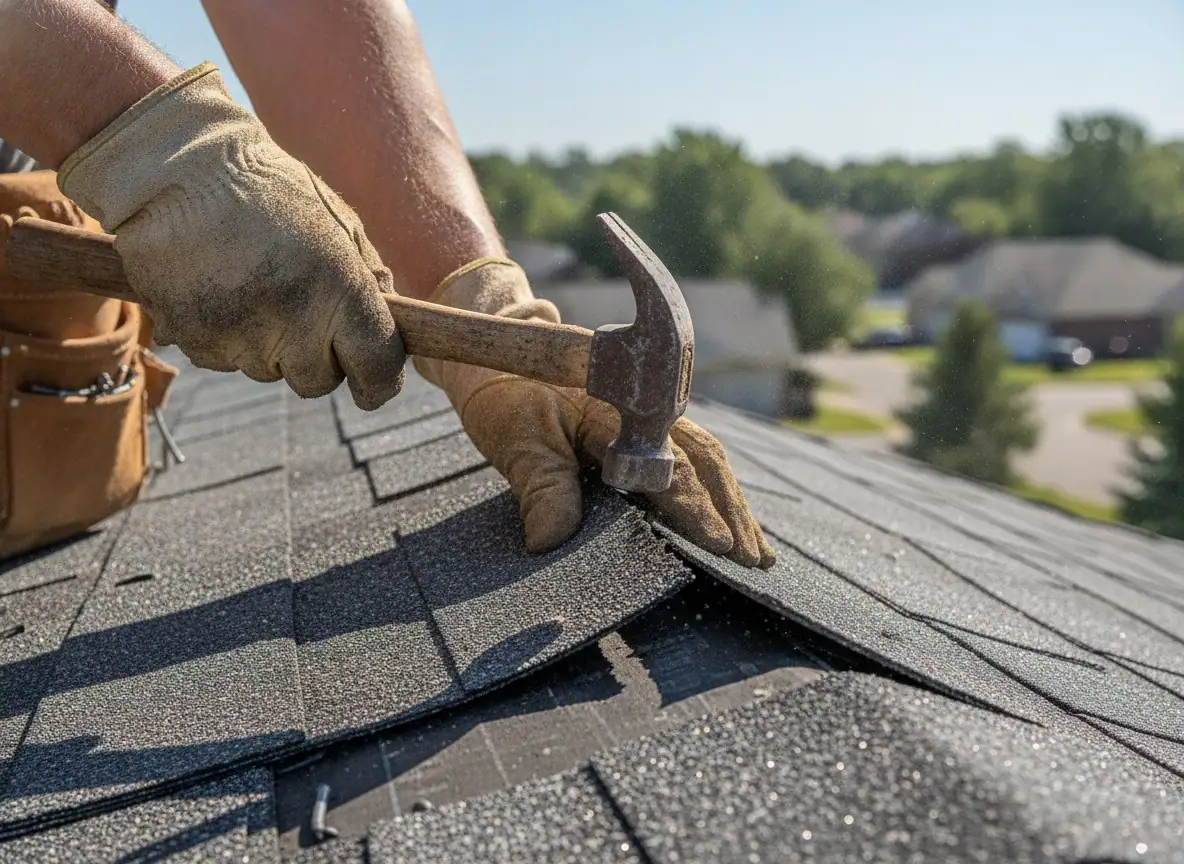
Insurance roof replacement refers specifically to a complete tear-off and re-roofing project that is funded, in whole or in significant part, by a homeowner’s property insurance policy after a qualifying loss event. It differs from a discretionary replacement in that the trigger is documented damage — typically from wind, hail, ice dams, falling debris, or fire — rather than simply the age of the roof reaching the end of its useful life.
Historically, insurance-funded roof replacements became dramatically more common in the northeastern United States following a series of severe Nor’easters and ice storm events throughout the 1990s and 2000s. Massachusetts Department of Insurance data reflects a consistent pattern of roofing-related claims spiking after major storm systems move through the region. The February 2015 blizzard season — which dropped a record-shattering 110.6 inches of snow on Boston over a six-week period — produced tens of thousands of roofing claims across Greater Boston alone. That single season permanently changed how many local insurance adjusters evaluate ice dam damage and structural loading stress on older roofs.
Read moreShow less
In Greater Boston, the housing stock adds additional complexity. A significant portion of homes in neighborhoods like Dorchester, Jamaica Plain, Brookline, and Somerville were constructed between the 1880s and 1930s. These structures frequently feature low-slope mansard sections, complex multi-valley gambrel rooflines, and original wood sheathing underneath multiple layers of historic roofing material. When a storm event damages one of these roofs, the insurance documentation process must account for code-required upgrades — including ice and water shield underlayment to a minimum of 24 inches past the interior wall line, per Massachusetts State Building Code 780 CMR — not just like-for-like material replacement.
Modern insurance policies in Massachusetts typically cover replacement cost value (RCV) rather than actual cash value (ACV) for homeowners who maintain adequate coverage, meaning you are reimbursed for the cost of a new roof rather than a depreciated one. Understanding which policy type you hold before a storm event occurs is critical to maximizing your claim outcome.
Schedule a Roof Inspection before storm season to establish a documented baseline condition report that can be invaluable during a future insurance claim.
Signs You Need an Insurance Roof Replacement
Storm Damage Indicators
- Shingles with circular impact marks, granule loss patterns, or cracked tabs following a hail event
- Missing shingles or entire sections of ridge cap material after high-wind events
- Lifted or curled shingle edges visible from the ground along eave and rake edges
- Dented or creased metal flashing at chimneys, skylights, or pipe boots
Interior Water Intrusion Signs
- Brown or yellow water staining on attic sheathing, insulation, or ceiling drywall
- Active dripping during rain events or during snowmelt periods
- Frost accumulation on interior attic surfaces during winter — a key ice dam indicator in Greater Boston homes
- Mold or mildew odor in upper-floor rooms or attic spaces
Structural Warning Signs
- Sagging or uneven roofline visible from street level — common in older Quincy and Braintree Colonials
- Daylight visible through attic decking at eave sections
- Gutters filled with heavy granule deposits after storm events, indicating accelerated shingle breakdown
Urgency note: If you observe active interior water intrusion, contact us immediately at (617) 712-2287 for emergency tarping and damage documentation before conditions worsen. Learn about our Emergency Roofing services.
Free, no-obligation estimates
Talk to Blue Hills Roofing Solutions
Tell us what you need and we’ll take it from there.
Our process
Our Insurance Roof Replacement Process
Blue Hills Roofing Solutions follows a structured, transparent process designed specifically for the Greater Boston insurance claim environment. Here is what to expect from first contact through project completion.
- 01
Initial Damage Inspection (Day 1–3)
We conduct a comprehensive visual and physical roof inspection within 72 hours of your call. Our inspector documents all storm-related damage with dated, geo-tagged photographs and written condition notes. For Greater Boston’s complex Victorian and Colonial ro
- 02
Insurance Claim Filing Support (Day 3–7)
We help you compile and submit a complete claim package to your insurer, including our damage report, storm event documentation from NOAA records, and a preliminary scope of work. Knowing which weather events are logged at the Blue Hill Meteorological Observat
- 03
Adjuster Meeting and Scope Review (Day 7–14)
We meet your insurance adjuster on-site to walk the roof together. This is the most critical step in securing a fair settlement. Our team ensures the adjuster documents every qualifying damage item and that code-required upgrades, including ice and water shiel
- 04
Supplement Filing if Required (Day 14–21)
If the adjuster’s initial estimate omits qualifying items, we file a supplement on your behalf with full supporting documentation. Supplement resolution typically adds 10–21 days but frequently results in meaningfully higher approved replacement values.
- 05
Material Selection and Scheduling (Day 21–30)
Once the claim is approved, we help you select roofing materials that meet Massachusetts State Building Code requirements, HOA guidelines (common in Brookline and Wellesley communities), and manufacturer wind rating minimums for coastal exposure zones.
- 06
Tear-Off and Installation (1–3 Days)
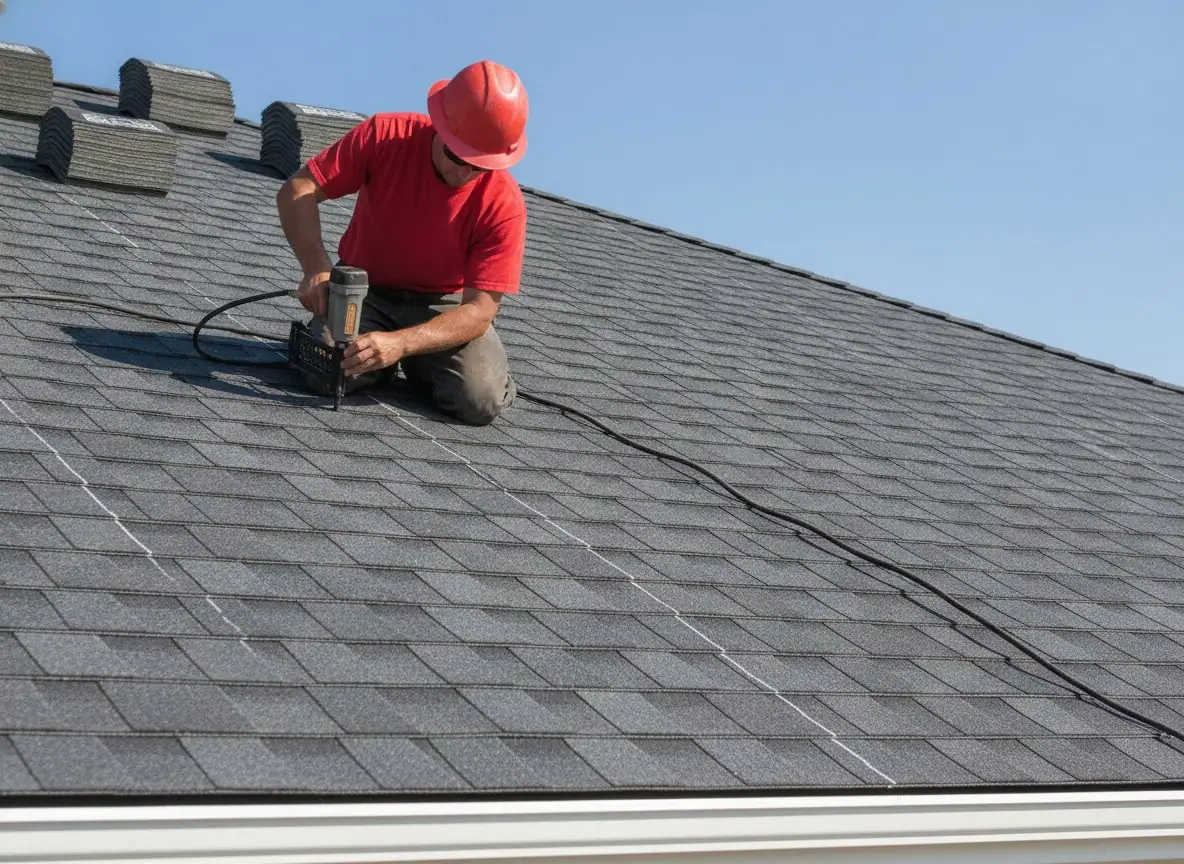
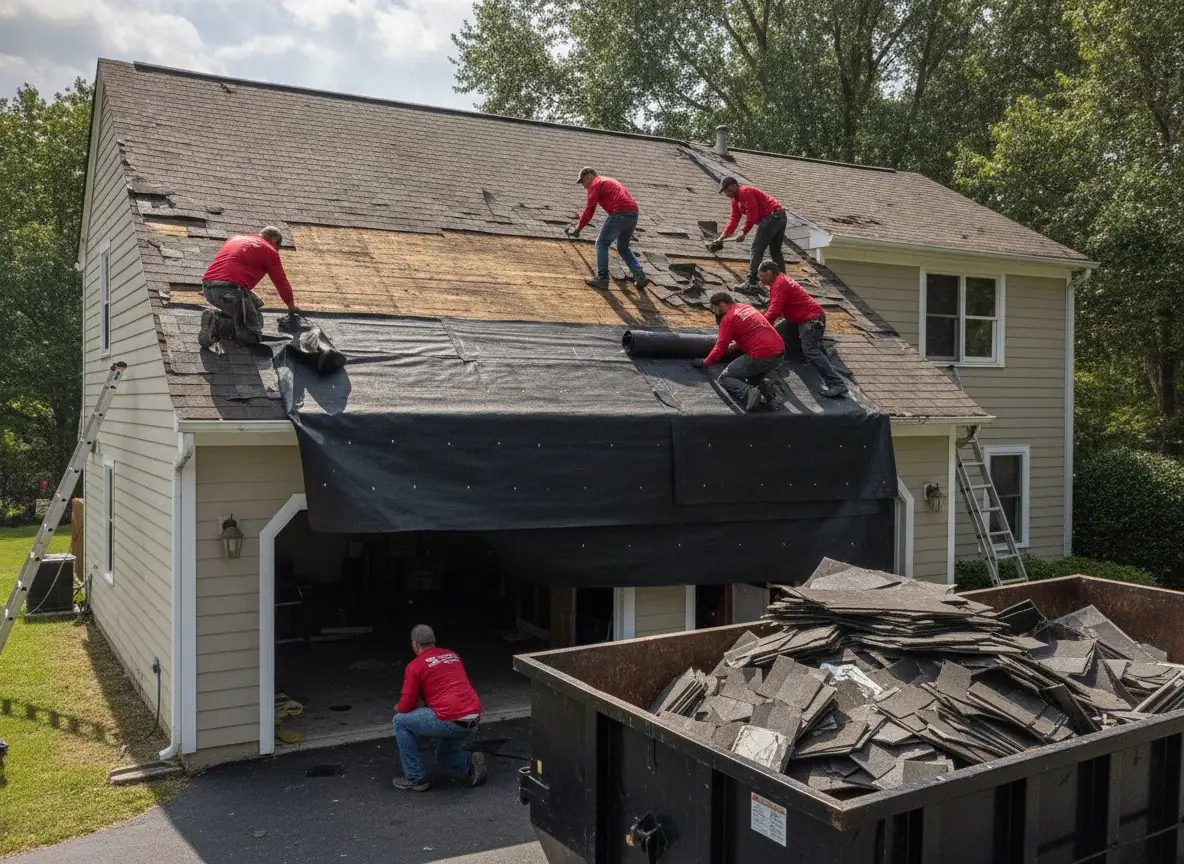
Our crews complete full tear-off, decking inspection and repair, underlayment installation, and new shingle installation. We work with municipal permit offices across all our service communities and schedule inspections as required.
- 07
Final Inspection and Claim Close-Out (Day 1–5 Post-Install)
We provide you with a completed project package — including permits, material warranties, and photo documentation — to submit to your insurer for final payment release.
Insurance Roof Replacement Methods and Approaches
Full Architectural Shingle Replacement
The most common insurance replacement method in Greater Boston. Dimensional architectural shingles rated for 130 mph wind resistance are standard for most residential claims. This method is appropriate for Colonial, Cape Cod, and split-level homes across Milton, Canton, Dedham, and Needham. Modern architectural shingles offer significant Class 4 impact resistance options that can qualify homeowners for insurance premium discounts.
Learn moreHybrid Roof System Replacement
Many Greater Boston homes feature a combination of steep-slope shingle sections and low-slope flat or modified bitumen sections — particularly common in Dorchester triple-deckers, Brookline brownstones, and Newton’s Craftsman-era homes. Insurance replacements on these properties require coordinated installation of both shingle and flat roofing systems under a single claim scope.
Historic Material Matching
In neighborhoods with active historical designation — such as Beacon Hill, parts of Jamaica Plain, and Wellesley’s historic district — insurance replacements may require material matching consultation with local historic commissions. We have experience navigating this process and sourcing appropriate approved materials.
Emergency Tarp and Interim Protection
When storm damage creates immediate interior exposure risk, we deploy emergency tarping as the first response. This documented emergency measure also serves as supporting evidence in insurance claim submissions. Learn more about Emergency Roofing response.
Insurance Roof Replacement Cost in Greater Boston, MA
Understanding the cost structure of an insurance roof replacement helps you evaluate your claim settlement and anticipate any out-of-pocket exposure.
Typical Cost Ranges
- Small to mid-size residential roof (1,200–1,800 sq ft footprint): $9,000–$16,000
- Large residential roof (1,800–2,800 sq ft footprint): $16,000–$28,000
- Complex multi-section roofs (dormers, mansards, mixed systems): $25,000–$45,000+
- Commercial flat roof sections (per square): $700–$1,400 per roofing square
Factors That Affect Your Replacement Cost
- Roof complexity: Greater Boston’s Victorian and Colonial rooflines with multiple valleys, dormers, and chimneys add 15–30% to baseline installation cost versus a simple gable roof
- Decking condition: Rotted or damaged plywood or board sheathing discovered during tear-off is billed separately; $3–$7 per square foot for replacement
- Code-required upgrades: Ice and water shield, updated ventilation, and code-compliant drip edge are mandatory in Massachusetts and must be included in any compliant replacement
- Material grade selected: Standard 30-year architectural shingles versus Class 4 impact-resistant products create a $1,500–$4,000 cost differential on a typical Greater Boston home
- Your deductible: Massachusetts homeowner deductibles for wind and hail events typically range from $500 to 2% of dwelling value
Read moreShow less
Your approved insurance settlement covers the bulk of replacement cost in qualifying claims. We provide detailed written estimates aligned with Xactimate pricing standards — the industry-standard estimating platform used by most Massachusetts insurers — to maximize settlement accuracy. Learn more about our Roof Replacement services.
Neighborhoods and Communities We Serve
Quincy and Braintree
These South Shore communities feature dense concentrations of 1950s–1970s ranch and split-level homes with relatively simple rooflines, but coastal wind exposure from Quincy Bay drives elevated wind damage claim rates. Many roofs in these communities are overdue for replacement, making storm events the trigger for long-needed upgrades.
Brookline and Newton
Large Victorian, Tudor, and Craftsman-era homes with steep multi-pitch rooflines, decorative dormers, and slate or wood shake original materials. Insurance replacements in these communities frequently involve historic review and premium material specifications. Average replacement costs run 20–35% above the Greater Boston mean.
Somerville and Medford
Dense triple-decker and two-family housing stock from the 1890s–1920s with flat or low-slope roof sections combined with steep side dormers. Ice dam damage is extremely common in these poorly ventilated older structures, and insurance claims often encompass both the roofing system and interior ceiling damage remediation.
We also serve Milton, Boston, Randolph, Dedham, Canton, Weymouth, Needham, Norwood, Waltham, Wellesley, Watertown, Malden, and Lynn. View all service areas.
Maintenance Tips to Protect Your Roof Between Claims
Proactive maintenance helps you avoid preventable damage and keeps your roof in insurable condition. These tips are specifically relevant to Greater Boston’s climate and housing stock.
- Annual fall inspection: Schedule a professional inspection each October before Nor’easter season begins. Catching cracked flashing or lifted shingles before winter prevents the ice dam damage cycle common in Greater Boston homes.
- Attic insulation and ventilation audit: Insufficient attic insulation is the root cause of ice dam formation. Massachusetts Energy Code requires R-49 attic insulation in climate zone 5 — many older Greater Boston homes fall far short of this standard.
- Gutter cleaning (twice annually): Clean gutters in late November after leaf fall and again in April. Blocked gutters accelerate ice dam formation at eaves and create pooling that degrades fascia and soffit materials.
- Snow removal after major storms: Use a roof rake to remove snow within 3–4 feet of eave lines after storms depositing more than 12 inches. This single step dramatically reduces ice dam risk.
- Flashing inspection after wind events: Check chimney, skylight, and pipe boot flashing after any storm with sustained winds above 45 mph — a common occurrence in coastal Greater Boston communities.
- Document your roof’s condition annually: Dated photos of your roof’s condition provide baseline evidence that is invaluable if a future storm damage claim is disputed by your insurer.
Learn about our Roof Maintenance programs.
Why Choose Blue Hills Roofing Solutions
Greater Boston homeowners trust Blue Hills Roofing Solutions for insurance roof replacements because we combine genuine local expertise with a process built specifically around the Massachusetts insurance claim environment.
We understand the specific storm patterns tracked at the Blue Hill Meteorological Observatory in Milton. We know the municipal permit requirements in each of the 19+ communities we serve. We understand the architectural nuances of Greater Boston’s historic housing stock — from Somerville’s triple-deckers to Wellesley’s Colonials — and how those characteristics affect both damage patterns and insurance scope documentation.
Our adjuster meeting process is designed to maximize your approved claim value by ensuring every qualifying damage item and every code-required upgrade is included in the written scope before your insurer issues payment. We file supplements when needed and we do not consider a claim complete until you have received a fair settlement.
Read moreShow less
We back our installations with manufacturer material warranties and our own workmanship guarantee. From initial inspection through final permit sign-off, you have a single point of contact who knows your project and your community.
Call (617) 712-2287 to speak with a Greater Boston insurance roofing specialist today. Schedule your free inspection.
FAQ
Frequently Asked Questions: Insurance Roof Replacement in Greater Boston, MA
How do I know if my roof damage qualifies for an insurance claim in Massachusetts?
Qualifying damage is typically sudden and accidental — caused by a named storm event, hail, high winds, falling trees or debris, fire, or ice dam water intrusion. Normal wear and gradual deterioration due to age generally does not qualify. The key is documenting that the damage is causally linked to a specific storm event, which is why having a professional inspection and a contractor-prepared damage report before you file your claim significantly improves outcomes. Massachusetts is particularly active with Nor’easter and winter storm events that generate qualifying claims.
How much will I have to pay out of pocket for an insurance roof replacement?
If you hold a replacement cost value (RCV) policy, your out-of-pocket cost is typically limited to your deductible — commonly $500 to $2,500 for Greater Boston homeowners, or 1–2% of your dwelling value for wind/hail-specific deductibles. If you hold an actual cash value (ACV) policy, you may also be responsible for any depreciation amount the insurer applies to your settlement based on the roof’s age.
How long does an insurance roof replacement take from filing to completion in Greater Boston?
From initial inspection to completed installation, most insurance roof replacements in Greater Boston take between 4 and 10 weeks. Claim approval typically requires 2–4 weeks. Supplement resolution adds 1–3 weeks when necessary. Installation itself takes 1–3 days for most residential roofs once permits are obtained. Municipal permit timelines vary by community — Boston proper and Cambridge tend to have longer permit queues than suburban communities like Canton or Dedham.
Will filing a roof insurance claim raise my homeowner’s insurance premium in Massachusetts?
Filing a single weather-related claim generally does not trigger premium increases in Massachusetts — weather events are classified as “Acts of God” rather than policyholder-caused losses. However, filing multiple claims within a short period may affect your risk profile. We recommend consulting with your insurance agent before filing to understand your specific policy terms.
Does Blue Hills Roofing Solutions handle the insurance paperwork, or is that my responsibility?
We provide comprehensive insurance claim support including the damage inspection report, photo documentation packages, storm event corroboration using NOAA and Blue Hill Observatory records, and we meet with your adjuster on-site. We also file supplements when initial settlements undervalue the approved scope. However, you remain the policyholder of record and make all final decisions regarding your claim.
My roof is older — can I still get an insurance replacement approved?
Yes, but the specifics depend on your policy type. With an RCV policy, age is less of a factor — qualifying storm damage on a 20-year-old roof can still generate a full replacement approval. With an ACV policy, significant depreciation may be applied, reducing your net settlement. Our claim documentation process specifically focuses on demonstrating storm causation rather than age deterioration, which is the most effective approach to maximizing older-roof claim approvals.
Do I need a permit for an insurance roof replacement in Greater Boston communities?
Yes. Massachusetts State Building Code requires permits for full roof replacements in all municipalities, including all communities we serve. Blue Hills Roofing Solutions pulls all required permits and schedules inspections as part of our standard process. Permit documentation is also required by most insurers before releasing final replacement cost holdback payments.
What makes Greater Boston insurance roof replacement claims different from other parts of the country?
Several factors make Greater Boston unique. The mandatory ice and water shield requirements under 780 CMR are more extensive than in many other states and must be included in every code-compliant replacement scope. The age and complexity of the local housing stock — with its Victorian dormers, mansard rooflines, and multi-system flat/steep combinations — creates more complex scope documentation than simple gable roofs common elsewhere. And the density of storm events tracked at Blue Hill Observatory since 1885 gives us an unparalleled local weather record to corroborate storm dates and intensities for claim purposes.
Get Your Insurance Roof Replacement Started Today
If your Greater Boston home has experienced storm, hail, or wind damage, don’t wait. Insurance claim deadlines apply, and delayed documentation can jeopardize your settlement. Blue Hills Roofing Solutions is ready to inspect your roof, document qualifying damage, and guide you through every step of the insurance replacement process — from adjuster meeting through final permit sign-off.
We serve Milton, Quincy, Boston, Braintree, Randolph, Dedham, Canton, Brookline, Weymouth, Needham, Norwood, Medford, Newton, Waltham, Wellesley, Watertown, Malden, Somerville, Lynn, and surrounding Greater Boston communities.
Call us now at (617) 712-2287 or submit a contact form online to schedule your free damage inspection. Our team responds promptly — because when your roof is damaged, time matters.
Get in touch
Find roofing help near you
Request a free estimate online or give us a call — our team will follow up quickly.
- Call us(617) 712-2287
- Visit2 Granite Ave Ste 512, Milton, MA 02186
- HoursMon-Sun 7am-7pm